
Virtual production has transformed the film, television, and broadcast industries by combining real-world sets with advanced LED walls, real-time rendering, and camera tracking technologies. Instead of relying heavily on green screens, virtual production studios use massive LED displays to create realistic digital environments that actors can interact with during filming.
However, even the most advanced LED wall cannot produce professional results without carefully designed lighting. Choosing the right lighting equipment is essential for creating realistic scenes, maintaining color accuracy, reducing reflections, and ensuring seamless integration between physical and virtual environments.
In this guide, we’ll explain how to choose professional lighting for virtual production studios, the key equipment you’ll need, and the factors to consider before investing in a lighting system.
What Is a Virtual Production Studio?
A virtual production studio combines physical sets with digital environments displayed on high-resolution LED walls.
Using real-time rendering engines and camera tracking systems, the background changes naturally as the camera moves, creating realistic perspectives without extensive post-production.
Virtual production is commonly used for:
- Film production
- Television broadcasting
- Commercial advertising
- Corporate video production
- Live streaming
- News studios
- Virtual events

Why Lighting Is Critical in Virtual Production
Unlike traditional green screen workflows, virtual production requires lighting that matches the virtual environment displayed on the LED wall.
Poor lighting can cause:
- Unrealistic shadows
- Incorrect color reproduction
- Visible reflections
- Mismatched lighting direction
- Camera exposure problems
- Reduced image quality
Professional lighting ensures actors blend naturally into the digital scene.
Key Factors When Choosing Virtual Production Lighting
High Color Accuracy
Color accuracy is one of the most important requirements.
Choose fixtures with:
- High CRI (95+)
- High TLCI ratings
- Consistent color output
- Stable white balance
Accurate colors help cameras capture natural-looking skin tones and scenery.
Adjustable Color Temperature
Virtual productions often simulate different times of day.
Professional fixtures should offer adjustable color temperatures, typically ranging from 2700K to 6500K or wider.
This flexibility allows lighting to match sunrise, daylight, sunset, or nighttime scenes.
Flicker-Free Performance
Studio cameras often record at high frame rates.
Lighting fixtures should provide flicker-free operation to eliminate unwanted visual artifacts during filming.
This is especially important for:
- Slow-motion recording
- Broadcast television
- Commercial production
- High-speed cinematography
Silent Operation
Many productions record live audio on set.
Fanless or low-noise lighting fixtures prevent unwanted background noise from being captured by microphones.
Best Lighting Fixtures for Virtual Production
LED Soft Lights
Soft LED panels provide smooth, natural illumination that complements LED wall environments.
They are ideal for:
- Key lighting
- Fill lighting
- Interview setups
- Broadcast production
RGBAL LED Panels
RGBAL fixtures offer:
- Excellent white light
- Wide color gamut
- Adjustable color temperature
- Superior camera performance
These fixtures are increasingly popular in virtual production studios.
Fresnel Lights
LED Fresnel fixtures provide adjustable beam angles for controlled key lighting and dramatic effects.
Profile Spotlights
Profile fixtures allow precise beam shaping while minimizing unwanted light spill onto LED walls.
Tube Lights
LED tube lights are commonly used for accent lighting, practical effects, and creative scene enhancement.
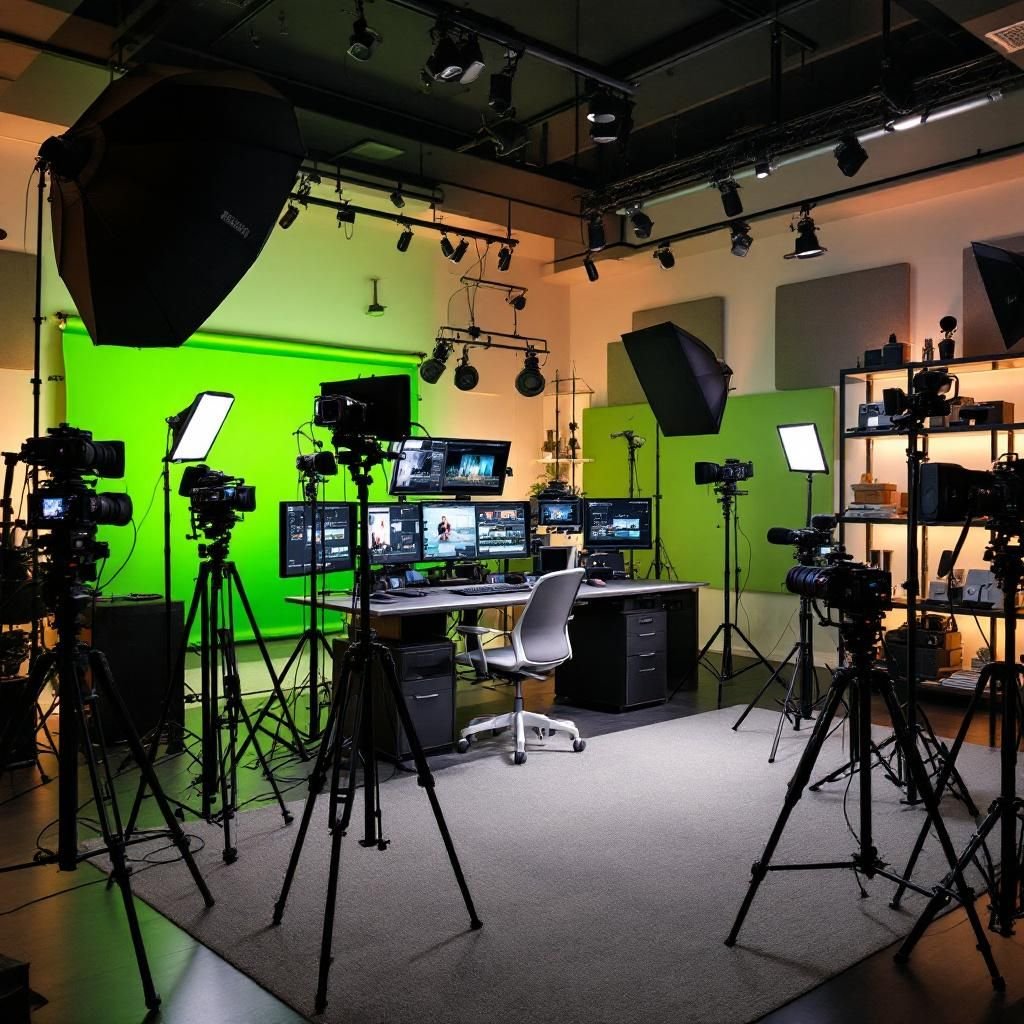
Three-Point Lighting in Virtual Production
Most virtual production studios still rely on the traditional three-point lighting method.
This includes:
Key Light
Provides the primary illumination for the subject.
Fill Light
Reduces harsh shadows while maintaining natural depth.
Back Light
Separates the subject from the background and adds dimension.
Carefully balancing these three light sources creates realistic and cinematic results.
Managing Reflections from LED Walls
LED walls are highly reflective.
To minimize reflections:
- Position lights carefully
- Use soft light modifiers
- Avoid direct lighting toward the LED wall
- Control beam angles
- Adjust camera angles when necessary
Proper lighting placement significantly improves image quality.
Lighting Control Systems
Professional virtual production studios often integrate lighting with:
- DMX512
- Art-Net
- sACN
- Media servers
- Lighting consoles
These systems allow synchronized control of lighting, LED walls, cameras, and visual effects.
Energy Efficiency
Modern LED fixtures consume significantly less power than traditional studio lighting.
Benefits include:
- Lower electricity costs
- Reduced heat generation
- Longer fixture lifespan
- Lower maintenance
- Improved sustainability
Energy-efficient lighting is particularly valuable for studios operating long production schedules.
Common Mistakes to Avoid
Avoid these common virtual production lighting mistakes:
- Using low-CRI fixtures
- Ignoring color temperature matching
- Creating unwanted reflections
- Overlighting the LED wall
- Choosing noisy fixtures
- Poor fixture positioning
- Failing to calibrate lighting with cameras
Careful planning prevents costly production delays.
Future Trends
Virtual production lighting continues to evolve rapidly.
Emerging technologies include:
- AI-assisted lighting control
- Automated color matching
- Intelligent fixture calibration
- Real-time lighting adjustments
- Advanced RGBAL lighting systems
- Cloud-based lighting management
These innovations will make studio lighting even more accurate and efficient.
Frequently Asked Questions
What lighting is best for virtual production?
High-CRI LED soft lights, RGBAL panels, Fresnel lights, and profile spotlights are commonly used because they provide accurate color, adjustable white light, and excellent camera performance.
Why is CRI important in virtual production?
A high CRI ensures that skin tones, costumes, and set elements appear natural and accurate on camera.
Do virtual production studios use three-point lighting?
Yes. Three-point lighting remains the standard technique for illuminating subjects while maintaining depth and realism.
Why are fanless lights recommended?
Fanless fixtures eliminate operational noise, making them ideal for productions that record live audio.
Can DMX control virtual production lighting?
Yes. Most professional studios use DMX512, Art-Net, or sACN to synchronize lighting with LED walls and other production systems.
Conclusion
Choosing the right lighting for a virtual production studio requires more than simply selecting bright fixtures. High color accuracy, adjustable color temperature, flicker-free performance, silent operation, and seamless integration with LED walls are all essential for achieving professional results.
By investing in high-quality LED panels, Fresnel lights, profile spotlights, and advanced lighting control systems, studios can create realistic environments that enhance production quality while reducing post-production work. As virtual production technology continues to advance, selecting future-ready lighting equipment will help ensure your studio remains competitive for years to come.