
Three-point lighting is the foundation of professional video production. Whether you’re creating YouTube videos, filming interviews, producing online courses, recording podcasts, shooting documentaries, or operating a television studio, understanding three-point lighting can dramatically improve the quality of your content.
This lighting technique has been used for decades by filmmakers, broadcasters, photographers, and content creators because it creates balanced, professional-looking images while maintaining natural depth and dimension.
In this guide, you’ll learn what three-point lighting is, how it works, the role of each light, and how to use it effectively in your own productions.
What Is Three-Point Lighting?
Three-point lighting is a lighting setup that uses three separate light sources to illuminate a subject.
The three lights are:
- Key Light
- Fill Light
- Back Light
Each light serves a specific purpose.
When combined correctly, they create a well-balanced image that looks professional on camera.
The goal is to provide adequate illumination while maintaining natural shadows, depth, and subject separation.
Why Is Three-Point Lighting Important?
Without proper lighting, video footage can appear:
- Flat
- Unprofessional
- Harsh
- Difficult to watch
Three-point lighting helps:
- Improve image quality
- Create depth and dimension
- Enhance skin tones
- Reduce unwanted shadows
- Separate subjects from backgrounds
- Increase production value
It remains one of the most widely used lighting techniques in professional video production.
Understanding the Three Lights
Key Light
The key light is the primary source of illumination.
It provides most of the light falling on the subject and establishes the overall visual direction of the scene.
Recommended Placement
The key light is typically positioned:
- 45 degrees from the camera
- Slightly above eye level
- Angled downward toward the subject
This placement creates natural-looking facial shadows while maintaining visibility.
Common Fixtures Used as Key Lights
- Fresnel lights
- Flat panel lights
- Soft LED panels
- Softboxes
The key light usually remains the brightest light in the setup.
Fill Light
The fill light softens shadows created by the key light.
Without a fill light, shadows may become too dark and distracting.
Recommended Placement
The fill light is generally positioned:
- Opposite the key light
- Near camera level
- At lower intensity
Its purpose is not to eliminate shadows completely but to reduce excessive contrast.
Typical Brightness Levels
A common setup uses:
- Key Light: 100%
- Fill Light: 30–50%
This ratio creates a natural and balanced appearance.
Back Light
The back light is positioned behind the subject.
It is sometimes called:
- Hair light
- Rim light
- Edge light
Purpose of the Back Light
The back light creates a subtle highlight around the subject’s head and shoulders.
Benefits include:
- Better subject separation
- Increased depth
- More professional appearance
Without a back light, subjects can blend into the background.
Recommended Placement
The back light should be:
- Positioned behind the subject
- Mounted above head level
- Directed toward the shoulders and hair
The effect should be subtle rather than overpowering.
How Three-Point Lighting Creates Depth
One reason professional productions look better than amateur videos is depth.
Three-point lighting creates depth by:
- Illuminating the subject evenly
- Preserving natural shadows
- Separating the subject from the background
This combination helps create a three-dimensional appearance on a two-dimensional screen.
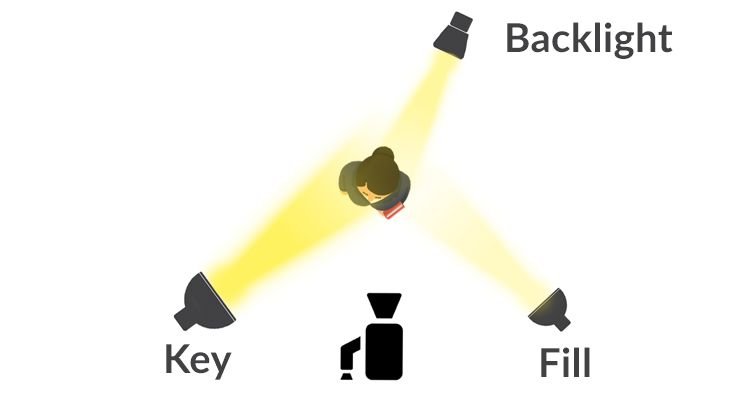
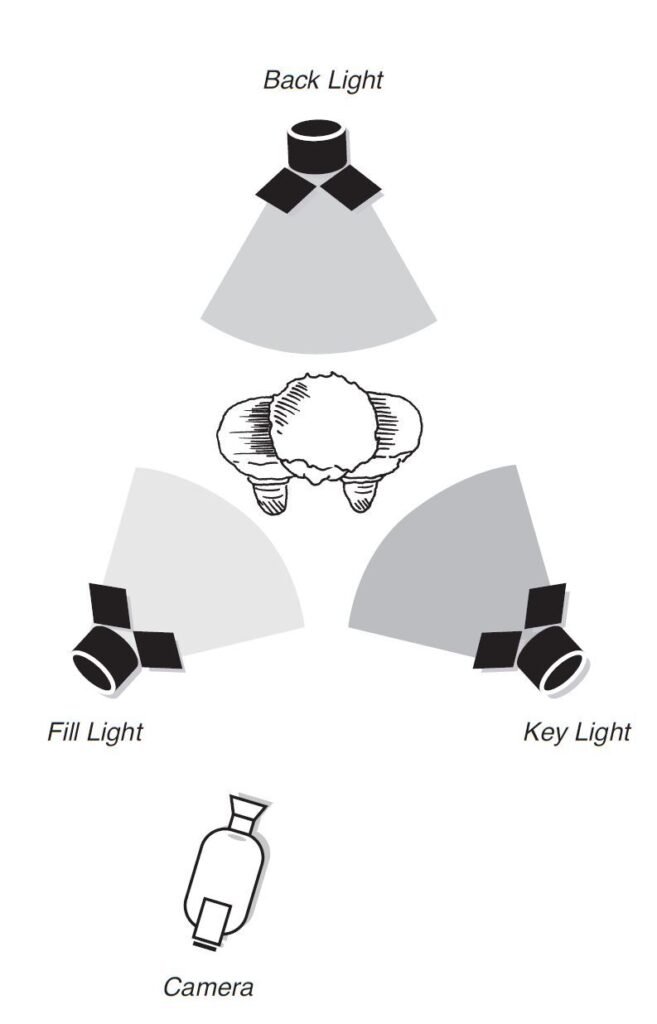
Three-Point Lighting Diagram
A basic setup looks like this:
Subject Position
Centered in front of the camera.
Key Light
45 degrees to one side.
Fill Light
45 degrees to the opposite side.
Back Light
Behind and slightly above the subject.
This arrangement forms the classic three-point lighting configuration used throughout the film and television industries.
Best Lighting Fixtures for Three-Point Lighting
Flat Panel Lights
Flat panels are popular because they provide:
- Soft illumination
- Adjustable brightness
- Adjustable color temperature
- Low heat output
They are commonly used in studios, interviews, and content creation environments.
Fresnel Lights
Fresnel fixtures offer:
- Directional control
- Adjustable beam spread
- Professional lighting precision
They are often used as key lights.
Soft LED Panels
Soft LED fixtures create flattering illumination that works well for:
- Interviews
- YouTube videos
- Corporate productions
- Educational content
Three-Point Lighting for Interviews
Interview productions often rely heavily on three-point lighting.
Benefits include:
- Professional appearance
- Natural skin tones
- Consistent image quality
- Better audience engagement
This setup is commonly used in:
- Corporate interviews
- Documentaries
- Television programs
- Podcasts
Three-Point Lighting for YouTube Videos
Many successful YouTube creators use simplified three-point lighting systems.
A basic setup may include:
- LED key light
- Fill light or reflector
- Small back light
This arrangement can dramatically improve video quality even in small home studios.
Three-Point Lighting for Live Streaming
Live streaming environments benefit from:
- Consistent illumination
- Reduced facial shadows
- Improved camera performance
Professional streamers often use three-point lighting to create polished broadcasts.
Common Three-Point Lighting Mistakes
Making the Fill Light Too Bright
Overpowering the fill light removes depth and creates a flat image.
Positioning Lights Too Low
Low light placement can create unnatural facial shadows.
Ignoring the Back Light
Many beginners skip the back light and lose important subject separation.
Mixing Color Temperatures
Combining warm and cool light sources often results in inconsistent visuals.
Using Low-Quality Fixtures
Poor-quality lights may produce color shifts, flicker, and inaccurate skin tones.
Can You Use Two-Point Lighting Instead?
Yes.
Many creators use:
- Key light
- Fill light
when working with limited budgets or space.
However, adding a back light usually provides a noticeable improvement in production quality.
Frequently Asked Questions
What is three-point lighting?
Three-point lighting is a technique that uses a key light, fill light, and back light to illuminate a subject and create a professional-looking image.
Why is three-point lighting important?
It improves image quality, creates depth, reduces harsh shadows, and helps subjects stand out from the background.
What is the most important light in a three-point setup?
The key light is generally considered the most important because it provides the primary illumination.
Can beginners use three-point lighting?
Yes. Three-point lighting is one of the easiest and most effective professional lighting techniques to learn.
Do YouTubers use three-point lighting?
Many professional YouTubers and content creators use three-point lighting or modified versions of it to improve video quality.
Conclusion
Three-point lighting remains one of the most effective and widely used lighting techniques in professional video production. By combining a key light, fill light, and back light, creators can achieve balanced illumination, natural depth, and a polished professional appearance.
Whether you’re producing YouTube videos, interviews, podcasts, live streams, online courses, or broadcast content, mastering three-point lighting is one of the fastest ways to improve production quality and create more engaging visual content.