
Lighting is one of the most important investments in any broadcast studio. Whether you’re operating a television station, corporate studio, news room, podcast facility, live streaming studio, educational production center, or content creation space, the quality of your lighting directly affects how professional your broadcasts appear.
Poor lighting can create unflattering skin tones, inconsistent colors, distracting shadows, and reduced production quality. On the other hand, a well-designed broadcast lighting system helps ensure clear visuals, accurate colors, and a polished viewing experience.
In this guide, we’ll explain the key factors to consider when choosing professional lighting for broadcast studios and how to select fixtures that deliver reliable, high-quality results.
Why Broadcast Studio Lighting Is Different
Broadcast lighting differs from stage lighting because cameras capture details differently than the human eye.
Studio lighting must provide:
- Consistent illumination
- Accurate color reproduction
- Natural skin tones
- Minimal shadows
- Reliable performance
Unlike concert or theatrical lighting, broadcast environments prioritize clarity, consistency, and camera compatibility.
Define Your Studio Requirements
Before selecting fixtures, evaluate your studio’s specific needs.
Consider:
- Studio size
- Ceiling height
- Number of presenters
- Camera positions
- Broadcast type
- Background design
- Operating hours
A news studio, for example, has different lighting requirements than a podcast studio or corporate video production facility.
Prioritize High CRI Ratings
One of the most important specifications for broadcast lighting is CRI (Color Rendering Index).
High CRI fixtures help reproduce colors accurately and naturally.
Recommended CRI
For professional broadcast environments:
- CRI 90+ = Good
- CRI 95+ = Excellent
High CRI ratings help ensure:
- Natural skin tones
- Accurate clothing colors
- Better overall image quality
Look for High TLCI Ratings
While CRI measures color accuracy for human vision, TLCI measures how lighting performs on camera.
Broadcast studios should prioritize fixtures with:
- TLCI 90+
- TLCI 95+ preferred
High TLCI ratings help reduce color correction requirements and improve camera performance.
Choose the Right Color Temperature
Most professional broadcast facilities use daylight-balanced lighting around 5600K.
Benefits include:
- Consistent camera performance
- Accurate color reproduction
- Simplified white balance settings
- Professional broadcast appearance
Some studios may require adjustable color temperature fixtures for added flexibility.
Select Soft Lighting Fixtures
Broadcast productions generally favor soft lighting because it creates flattering results on camera.
Soft illumination helps:
- Reduce facial shadows
- Improve skin tone appearance
- Create a professional image
This is especially important for presenters, guests, and interview subjects.
Flat Panel Lights for Broadcast Studios
Flat panel lights have become one of the most popular choices for modern broadcast environments.
Advantages include:
- Soft and even illumination
- High color accuracy
- Adjustable brightness
- Adjustable color temperature
- Low heat output
Flat panels are commonly used as:
- Key lights
- Fill lights
- Background lights
Their versatility makes them ideal for many studio applications.
Fresnel Lights for Broadcast Studios
Fresnel fixtures provide greater directional control than flat panels.
Benefits include:
- Adjustable beam angles
- Controlled illumination
- Professional light shaping
- Flexible positioning
Many studios use Fresnel lights alongside flat panels to create balanced lighting systems.
Consider Ceiling-Mounted Systems
Permanent broadcast facilities often benefit from ceiling-mounted lighting grids.
Advantages include:
- Clean studio appearance
- Consistent fixture placement
- Improved safety
- Easier production workflows
Ceiling-mounted systems also reduce floor clutter and maximize available space.
Evaluate Brightness Requirements
Different studio sizes require different light output levels.
Factors affecting brightness requirements include:
- Room dimensions
- Ceiling height
- Camera sensitivity
- Set design
- Background lighting
Choosing fixtures with adjustable intensity provides greater flexibility for future productions.
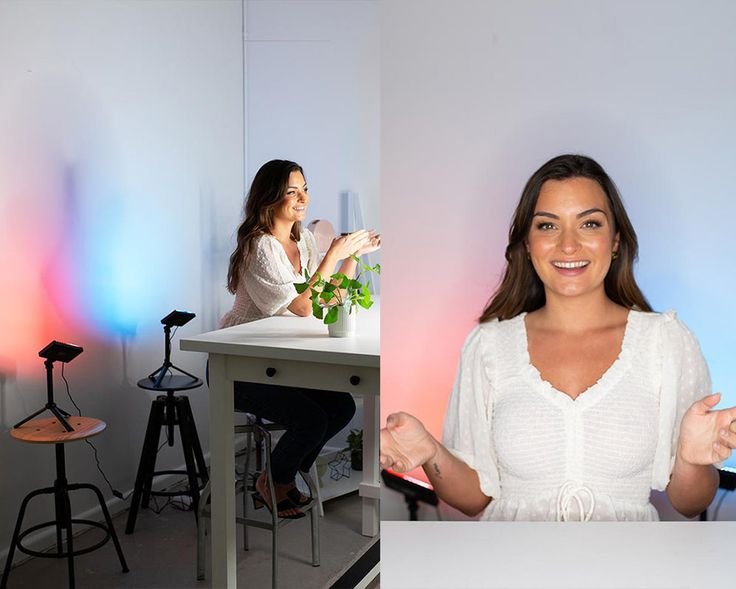
Use LED Lighting Technology
Modern broadcast studios overwhelmingly use LED lighting systems.
Benefits include:
- Low power consumption
- Long lifespan
- Reduced maintenance
- Low heat generation
- Stable color output
LED technology also allows for precise dimming and color temperature adjustments.
Ensure Flicker-Free Performance
Not all lighting fixtures are suitable for professional broadcasting.
Low-quality fixtures may create flicker that becomes visible on camera.
Professional broadcast lighting should offer:
- Flicker-free operation
- Stable output
- Camera compatibility
This is especially important when using high-frame-rate cameras.
Think About Future Expansion
Broadcast facilities often evolve over time.
When selecting lighting equipment, consider future requirements such as:
- Additional cameras
- Expanded studio spaces
- New production formats
- Virtual production systems
Scalable lighting systems help protect long-term investments.
Common Broadcast Studio Lighting Configurations
News Studios
Typically use:
- Flat panel key lights
- Fill lighting
- Background lighting
- Accent lighting
Interview Studios
Commonly use:
- Three-point lighting
- Soft key lights
- Back lighting
- Controlled background illumination
Podcast Studios
Often include:
- Soft LED panels
- Accent lighting
- Decorative background lighting
Corporate Studios
Usually combine:
- Flat panel lights
- Fresnel fixtures
- Presentation lighting
- Interview lighting
Common Mistakes When Choosing Broadcast Lighting
Prioritizing Price Over Quality
Low-cost fixtures often create long-term performance issues.
Ignoring TLCI Ratings
Broadcast lighting should always be evaluated from a camera perspective.
Mixing Different Color Temperatures
Inconsistent color temperatures can create noticeable visual problems.
Overlooking Heat Management
Fixtures that generate excessive heat may affect studio comfort.
Choosing Fixtures Without Dimming Control
Flexible brightness adjustment is essential for professional productions.
Frequently Asked Questions
What type of lighting is best for broadcast studios?
Flat panel lights and Fresnel fixtures are among the most commonly used lighting solutions in professional broadcast environments.
What CRI rating should broadcast lighting have?
Most professional studios use fixtures with CRI ratings above 90, with 95+ often preferred.
Why is TLCI important for broadcast lighting?
TLCI evaluates how accurately lighting performs on camera and helps ensure professional image quality.
What color temperature do broadcast studios use?
Most studios operate around 5600K because it closely matches daylight and works well with modern cameras.
Why do broadcast studios use LED lighting?
LED technology offers energy efficiency, low heat output, long lifespan, stable color performance, and advanced control features.
Conclusion
Choosing professional lighting for a broadcast studio involves more than simply selecting bright fixtures. Broadcast environments require lighting systems that deliver accurate color reproduction, consistent output, camera compatibility, and long-term reliability.
By prioritizing high CRI and TLCI ratings, selecting appropriate color temperatures, investing in quality LED fixtures, and designing a flexible lighting system, studios can create professional broadcasts that meet modern production standards and deliver exceptional viewer experiences.