
When audiences attend a concert, they see dazzling beams sweeping across the arena, vibrant color changes synchronized to the music, massive LED video walls, and dramatic lighting effects that elevate every performance. What many don’t see is the complex network of equipment, technology, and professionals working behind the scenes to make it all happen.
A professional concert lighting system is much more than a collection of stage lights. It is a carefully designed ecosystem of intelligent fixtures, control consoles, power distribution, networking, rigging, and skilled technicians working together to deliver a flawless show. Every lighting cue is planned, programmed, tested, and executed with precision to ensure a memorable experience for both performers and audiences.
In this guide, we’ll take you behind the scenes to explore how a professional concert lighting system is designed, installed, programmed, and operated.
Planning the Lighting System
Every successful concert begins long before the audience arrives.
Lighting designers and production managers work closely with artists, stage designers, and event organizers to determine:
- Venue size
- Stage dimensions
- Performance style
- Audience capacity
- Rigging limitations
- Power availability
- Camera and broadcast requirements
- Indoor or outdoor environment
This planning stage determines the number of fixtures, trusses, control systems, and crew members required for the production.
Designing the Lighting Layout
After assessing the venue, lighting designers create a detailed lighting plot showing the exact location of every fixture.
A professional lighting layout typically includes:
- Front lighting
- Back lighting
- Side lighting
- Audience lighting
- Overhead truss lighting
- Floor-mounted fixtures
- Follow spots
- Special effects lighting
The objective is to provide balanced illumination while creating visually dynamic stage looks throughout the performance.
Choosing the Right Lighting Fixtures
Professional concerts use multiple fixture types to achieve different visual effects.
Moving Head Beam Lights
Beam fixtures produce narrow, high-intensity light shafts that create dramatic aerial effects.
They are commonly used for:
- Concert openings
- Audience sweeps
- High-energy songs
- Festival performances
Moving Head Wash Lights
Wash fixtures provide broad, even illumination across performers and stage scenery.
They form the foundation of most concert lighting systems.
Moving Head Spot Lights
Spot fixtures offer focused lighting and advanced features including:
- Gobo projection
- Motorized zoom
- Rotating prisms
- Focus adjustment
- Framing effects
These fixtures highlight performers while adding creative visual elements.
LED Blinders and Effect Lights
Additional fixtures often include:
- LED blinders
- Strobe lights
- Pixel bars
- LED battens
- Audience lights
These fixtures increase audience engagement during major musical moments.
Rigging and Truss Systems
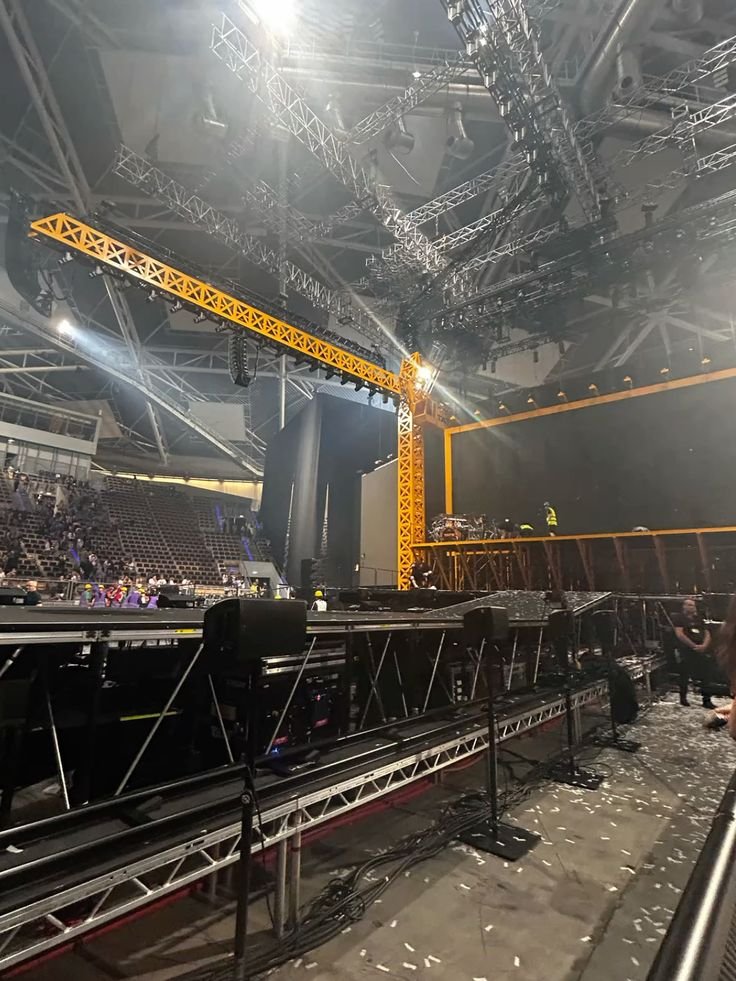
Before any lighting fixture is powered on, experienced rigging crews install the structural support system.
Professional truss systems are designed to:
- Support heavy lighting fixtures
- Maintain safe load limits
- Simplify transportation
- Enable fast installation
- Provide flexible fixture placement
Safety inspections are performed before every performance to ensure all equipment is securely mounted.
Power Distribution
Large concerts require carefully managed electrical systems.
Power distribution equipment includes:
- Power distribution units
- Circuit protection devices
- Load balancing systems
- Backup power supplies
- Power monitoring equipment
Proper power management ensures every lighting fixture operates safely and reliably.
Lighting Control Systems
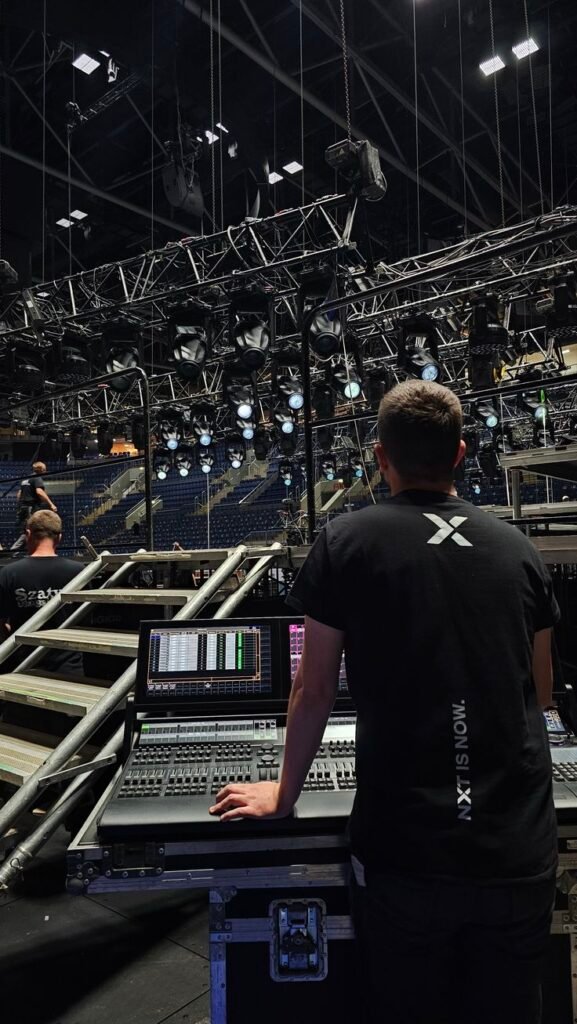
At the heart of every concert lighting system is the lighting console.
Professional lighting consoles control:
- Fixture intensity
- Color mixing
- Pan and tilt movement
- Motorized zoom
- Gobo selection
- Prism effects
- Pixel mapping
- Cue execution
Commands are transmitted to fixtures using protocols such as DMX512, Art-Net, and sACN.
Programming the Show
Before the concert begins, lighting programmers build the show using hundreds—or sometimes thousands—of lighting cues.
Programming includes:
- Color palettes
- Position presets
- Beam effects
- Cue timing
- Scene transitions
- Audience lighting
- Video synchronization
Every cue is carefully tested during rehearsals.
Synchronizing with Music
Professional concerts synchronize lighting with:
- Live performances
- Audio playback
- Timecode
- LED video walls
- Media servers
- Lasers
- Pyrotechnics
- Stage automation
This synchronization ensures every lighting change occurs at precisely the right moment.
The Production Crew
Behind every successful lighting system is a highly skilled production team.
Key roles include:
Lighting Designer
Creates the artistic vision and overall lighting design.
Lighting Programmer
Programs cues, effects, and show sequences.
Lighting Operator
Runs the lighting console during the performance.
Riggers
Install trusses and safely suspend lighting equipment.
Electricians
Manage power distribution and electrical safety.
Stage Technicians
Maintain equipment and assist with setup and troubleshooting.
Successful productions depend on clear communication between all departments.
Rehearsals
Before opening night, production teams conduct multiple rehearsals to:
- Verify cue timing
- Test fixture movement
- Check color consistency
- Synchronize lighting with music
- Confirm video integration
- Identify technical issues
Rehearsals reduce the likelihood of problems during the live performance.
During the Live Show
Once the concert begins, the lighting control room becomes a hub of activity.
Operators continuously monitor:
- Fixture status
- DMX networks
- Power systems
- Timecode synchronization
- Video playback
- Audience response
Even automated productions require experienced technicians who can react quickly if unexpected situations arise.
After the Performance
When the concert ends, the production crew immediately begins dismantling the lighting system.
Equipment is:
- Powered down safely
- Removed from trusses
- Packed into flight cases
- Inspected for damage
- Prepared for transport
- Maintained before the next show
Efficient teardown is essential, especially for touring productions with tight schedules.
Technology Driving Modern Concert Lighting
Today’s professional productions increasingly rely on:
- Intelligent LED fixtures
- AI-assisted programming
- Wireless DMX
- Pixel mapping
- Motorized zoom
- Cloud-based diagnostics
- Networked lighting control
- Energy-efficient LED technology
These innovations improve reliability while expanding creative possibilities.
Frequently Asked Questions
What equipment is used in a professional concert lighting system?
Professional systems typically include moving head beam, wash, and spot lights, LED blinders, pixel bars, lighting consoles, DMX networks, trusses, power distribution equipment, media servers, and timecode synchronization systems.
How many people operate concert lighting?
The number varies by production size. Small concerts may require only a few technicians, while arena tours and stadium shows often involve dedicated lighting designers, programmers, operators, riggers, electricians, and stage technicians.
Why are rehearsals so important?
Rehearsals allow production teams to verify cue timing, fixture positioning, synchronization, and equipment reliability before the audience arrives.
Do concerts use AI for lighting?
Some modern productions use AI to assist with programming, beat detection, and fixture optimization, but creative decisions remain the responsibility of professional lighting designers.
What is the biggest challenge in concert lighting?
Maintaining consistent performance while coordinating hundreds of lighting fixtures, multimedia systems, and live performers across changing venues is one of the industry’s greatest challenges.
Conclusion
Behind every spectacular concert is a sophisticated lighting system supported by advanced technology and an experienced production team. From planning and rigging to programming, synchronization, and live operation, every component plays a critical role in delivering visually stunning performances.
Whether you’re producing a local concert, an international tour, a music festival, or a televised event, understanding what happens behind the scenes helps you appreciate the expertise required to create world-class live entertainment. Investing in professional lighting equipment, intelligent control systems, and skilled technicians is the key to delivering unforgettable concert experiences.