
One of the most captivating aspects of a live concert is the perfect harmony between music and lighting. As the tempo changes, the chorus builds, or the beat drops, lighting responds instantly—creating an immersive visual experience that enhances every performance. This synchronization is achieved through a combination of intelligent lighting systems, lighting consoles, DMX control, timecode, and advanced programming.
Whether it’s a stadium concert, music festival, theatre production, church service, or corporate event, synchronized lighting transforms live performances into unforgettable experiences. In this guide, we’ll explore how professional lighting systems synchronize with music and the technologies that make it possible.
Why Music Synchronization Matters
Lighting does more than illuminate the stage—it supports the emotional impact of the performance.
Synchronized lighting helps:
- Enhance audience engagement
- Highlight key musical moments
- Build excitement during transitions
- Reinforce the mood of each song
- Improve storytelling during performances
- Create memorable visual experiences
Professional lighting designers carefully program every cue to complement the music without distracting from the performers.
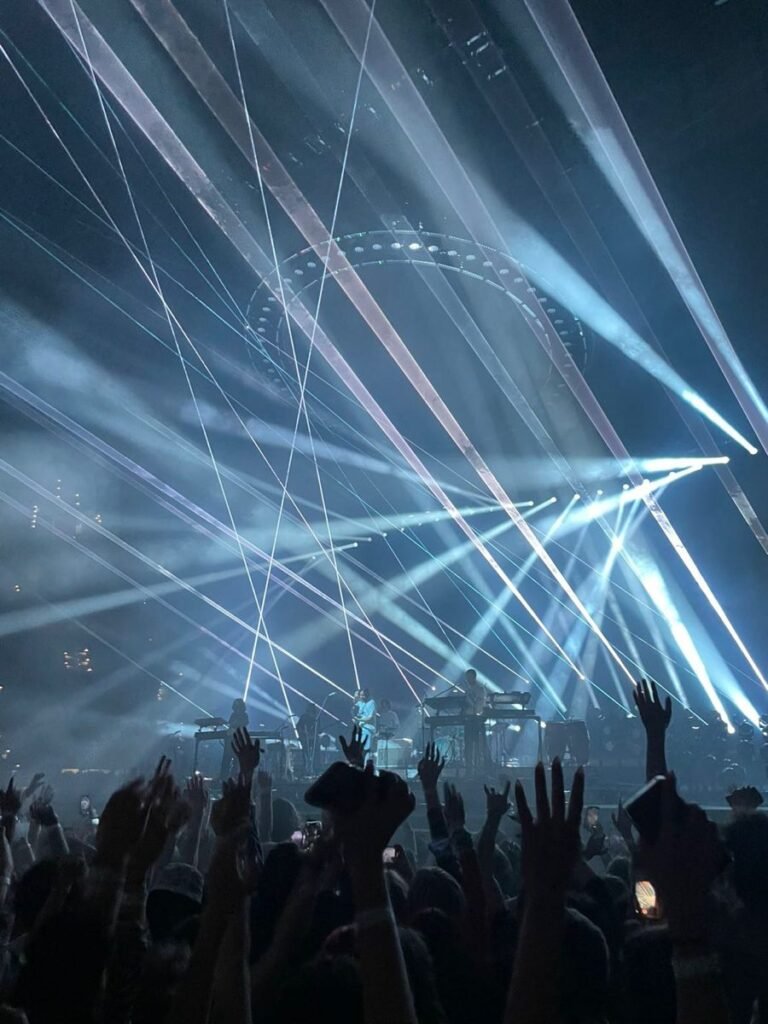
The Technology Behind Music Synchronization
Several technologies work together to synchronize lighting with music.
These include:
- Lighting consoles
- DMX512 control
- Intelligent moving head fixtures
- Timecode
- Audio playback systems
- Media servers
- LED video walls
- Wireless DMX systems
Each component contributes to a seamless lighting performance.
DMX512: Controlling the Fixtures
DMX512 is the communication protocol that sends control signals from the lighting console to lighting fixtures.
Through DMX, operators can control:
- Brightness
- Color
- Pan and tilt movement
- Motorized zoom
- Gobo projection
- Strobe effects
- Prism effects
DMX determines how each lighting fixture performs once a cue is triggered.
Timecode: Perfect Timing
Timecode ensures lighting cues occur at the exact moment during a song.
Instead of manually pressing buttons throughout a performance, the lighting console follows a programmed timeline.
For example:
- Intro begins — Stage lights fade in.
- Drum beat starts — Moving head beams sweep across the audience.
- Chorus begins — Wash lights change color.
- Guitar solo — Spotlights focus on the performer.
- Finale — Strobes and audience blinders activate.
Every cue is executed with frame-level accuracy, ensuring consistent performances every night.
Beat-Synchronized Lighting
Not every performance uses pre-programmed timecode.
Many lighting consoles can synchronize effects with live music by detecting tempo or allowing operators to manually tap the beat.
Common beat-synchronized effects include:
- Flash effects
- Color changes
- Beam movement
- Chase sequences
- Pixel mapping animations
- Audience lighting
This method is popular for DJs, clubs, worship services, and live bands with flexible performances.
Intelligent Moving Head Lights
Moving head fixtures are the primary tools used in synchronized lighting shows.
They automatically perform actions such as:
- Pan and tilt movement
- Beam angle adjustment
- Color mixing
- Gobo changes
- Prism rotation
- Focus adjustment
- Motorized zoom
These automated movements allow designers to create complex visual sequences that match the rhythm and dynamics of the music.
LED Video and Lighting Integration
Modern concerts often synchronize lighting with:
- LED video walls
- Projection mapping
- Visual effects
- Animated graphics
- Stage automation
Media servers coordinate these systems so lighting and video appear as one unified production.
This integration creates immersive experiences for audiences.
AI and Intelligent Lighting
Artificial intelligence is beginning to enhance music synchronization by assisting with:
- Automatic beat detection
- Intelligent cue generation
- Dynamic color selection
- Scene optimization
- Real-time lighting adjustments
While AI improves workflow efficiency, lighting designers still make the creative decisions that define the show’s visual identity.
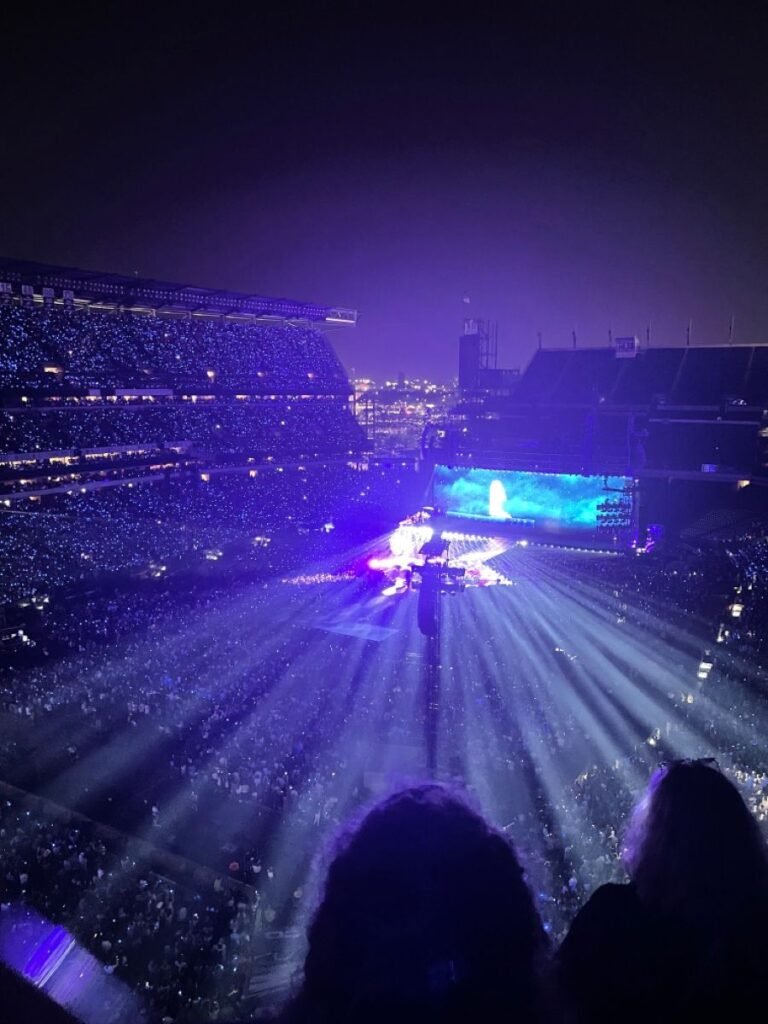
Wireless Lighting Control
Wireless DMX allows lighting fixtures to receive control signals without long cable runs.
Benefits include:
- Faster setup
- Greater flexibility
- Cleaner stage layouts
- Easier fixture placement
- Improved mobility for temporary events
Wireless systems are widely used for festivals, concerts, and touring productions.
Common Applications
Music-synchronized lighting is used for:
- Concert tours
- Music festivals
- Nightclubs
- Theatre productions
- Church worship services
- Corporate events
- Television music shows
- Award ceremonies
- Live broadcasts
- Esports events
Each application uses synchronization techniques suited to its production requirements.
Best Practices
Professional lighting designers follow several best practices:
- Program cues around the musical structure.
- Use timecode for repeatable performances.
- Keep transitions smooth and intentional.
- Avoid excessive strobe effects.
- Match lighting colors to the mood of the music.
- Test all cues during rehearsals.
- Maintain backup show files and control systems.
Preparation ensures reliable and visually impressive performances.
Future Trends
Music synchronization technology continues to evolve with innovations such as:
- AI-assisted lighting programming
- Cloud-based show control
- Wireless timecode distribution
- Real-time audio analysis
- Smarter lighting consoles
- Integrated lighting and video ecosystems
These advancements will enable even more creative and efficient live productions.
Frequently Asked Questions
How does concert lighting synchronize with music?
Lighting is synchronized using technologies such as DMX512, timecode, lighting consoles, and intelligent fixtures. These systems ensure lighting cues match the timing, rhythm, and dynamics of the music.
Does DMX synchronize lighting with music?
DMX controls lighting fixtures but does not provide timing. Timecode or manual programming determines when cues are triggered, while DMX sends the control commands to the fixtures.
What is beat-synchronized lighting?
Beat-synchronized lighting uses tempo detection or manual beat input to trigger lighting effects in rhythm with live music, making it ideal for DJs, live bands, and flexible performances.
Why do concerts use moving head lights?
Moving head lights can automatically change position, color, beam shape, and effects, making them ideal for creating dynamic lighting sequences that complement musical performances.
Is AI changing concert lighting?
Yes. AI is helping automate tasks such as beat detection, cue suggestions, and scene optimization, but professional lighting designers remain responsible for the artistic direction of the show.
Conclusion
Lighting synchronization is one of the key elements that transforms a live performance into a memorable visual experience. By combining DMX512, timecode, intelligent moving head fixtures, lighting consoles, media servers, and AI-assisted technologies, production teams can create shows where every lighting cue perfectly complements the music.
Whether you’re producing a concert, theatre performance, worship event, festival, or television broadcast, understanding how lighting synchronizes with music will help you design productions that captivate audiences and deliver professional, repeatable results.