
Stage lighting is one of the most important elements of any live performance, broadcast, or event production. The right lighting fixtures not only illuminate performers but also create atmosphere, guide audience attention, and enhance the overall visual experience.
However, with so many different lighting fixtures available, choosing the right one can be confusing for beginners and even experienced venue managers.
In this guide, we’ll explore 12 common types of stage lights, how they work, and where they are most commonly used.
Why Understanding Stage Light Types Matters
Every lighting fixture serves a specific purpose. Some are designed for broad illumination, while others create dramatic effects, project patterns, or follow performers around the stage.
Understanding the strengths and applications of each fixture helps lighting professionals design more effective and visually appealing productions.
1. Spotlights
Spotlights produce concentrated beams of light that highlight performers, speakers, or specific areas of a stage.
Common Uses
- Theater productions
- Public speaking events
- Worship services
- Corporate presentations
Advantages
- Strong focus
- Precise illumination
- Excellent audience visibility
2. Fresnel Lights
Fresnel lights are known for their soft-edged beams and smooth light distribution.
Named after the Fresnel lens they use, these fixtures are popular in both stage and studio environments.
Common Uses
- Film production
- Television studios
- Theater lighting
- Interview setups
Advantages
- Soft natural lighting
- Adjustable beam spread
- Minimal harsh shadows
3. Profile Spotlights
Profile spotlights produce highly controlled beams and allow designers to shape light precisely.
Many profile fixtures can project logos, gobos, and patterns.
Common Uses
- Theater productions
- Corporate events
- Architectural lighting
- Stage presentations
Advantages
- Sharp beam control
- Pattern projection
- Professional appearance
4. Flood Lights
Flood lights distribute wide and even illumination across large areas.
Unlike spotlights, they are designed to cover broad spaces rather than focus on specific subjects.
Common Uses
- Stage washes
- Background lighting
- Outdoor events
- Venue illumination
Advantages
- Wide coverage
- Consistent brightness
- Efficient large-area lighting
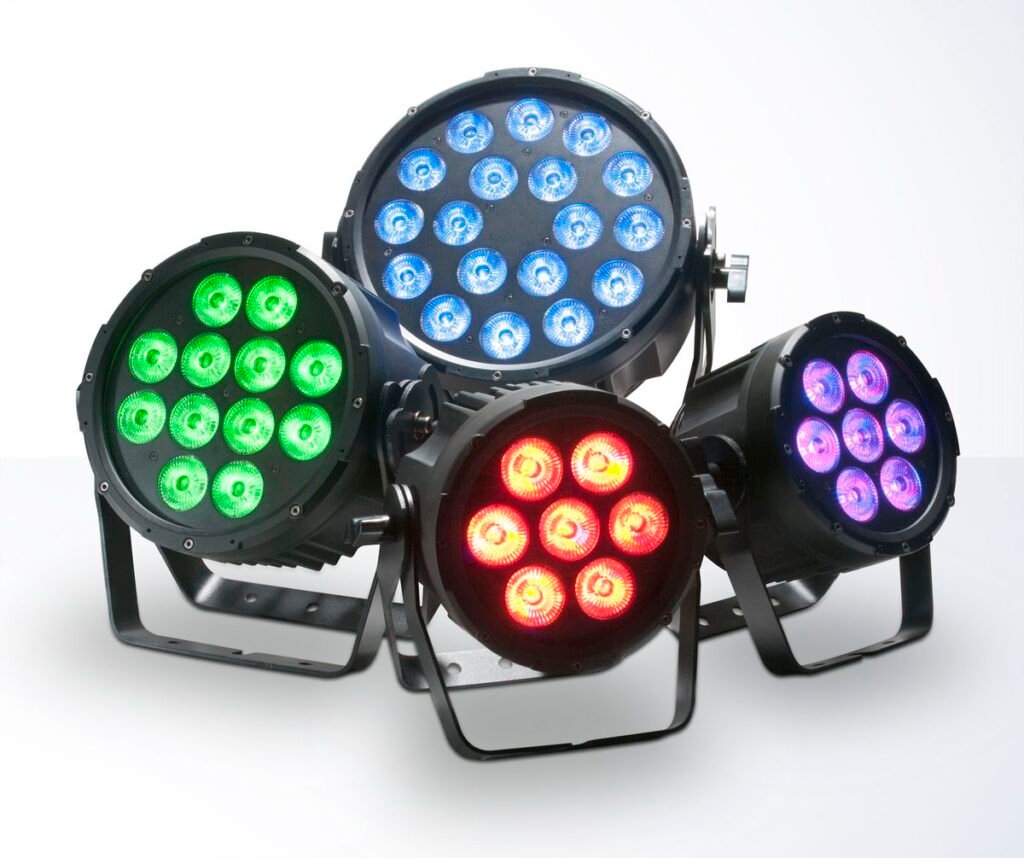
5. PAR Lights
PAR (Parabolic Aluminized Reflector) lights have been a stage lighting staple for decades.
Modern LED PAR fixtures provide vibrant colors and energy-efficient operation.
Common Uses
- Concert stages
- Event lighting
- Clubs
- Houses of worship
Advantages
- Affordable
- Versatile
- Easy to install
6. LED Panel Lights
LED panel lights produce soft and even illumination ideal for camera environments.
These fixtures have become standard equipment in modern studios.
Common Uses
- Film production
- Television broadcasting
- Photography
- Live streaming
Advantages
- Soft light output
- Energy efficient
- Excellent color consistency
7. Moving Head Lights
Moving head lights are intelligent fixtures capable of automated pan and tilt movement.
They are among the most popular fixtures used in modern entertainment lighting.
Common Uses
- Concerts
- Festivals
- Nightclubs
- Large-scale productions
Advantages
- Dynamic movement
- Color changing
- Multiple effects in one fixture
8. Beam Lights
Beam lights produce narrow and highly concentrated shafts of light.
They are commonly used for dramatic aerial effects.
Common Uses
- Concerts
- Festivals
- Touring productions
- Live shows
Advantages
- Powerful visual impact
- Long throw distance
- Visible beam effects
9. Wash Lights
Wash lights are designed to spread color evenly across stages and performance areas.
Common Uses
- Background lighting
- Stage washes
- Color effects
- Event productions
Advantages
- Uniform coverage
- Smooth color blending
- Flexible programming
10. Follow Spots
Follow spots are manually operated fixtures used to track performers as they move across a stage.
Common Uses
- Musical theater
- Concerts
- Awards ceremonies
- Live productions
Advantages
- Keeps performers visible
- Professional stage presentation
- Flexible operator control
11. Strobe Lights
Strobe lights create rapid flashes that add energy and excitement to performances.
Common Uses
- Concerts
- Clubs
- Festivals
- Special effects
Advantages
- Dramatic visual effects
- Audience engagement
- High-impact moments
12. Waterproof Stage Lights
Waterproof fixtures are designed for outdoor environments and harsh weather conditions.
Most professional outdoor fixtures carry IP-rated protection.
Common Uses
- Outdoor concerts
- Festivals
- Architectural lighting
- Permanent installations
Advantages
- Weather resistance
- Long-term reliability
- Outdoor safety
How to Choose the Right Type of Stage Light
Selecting the right fixture depends on several factors:
Venue Size
Larger venues often require higher-output fixtures and longer throw distances.
Application
Theater productions, concerts, churches, and television studios all have different lighting requirements.
Indoor vs Outdoor Use
Outdoor environments require waterproof and weather-resistant fixtures.
Control Requirements
Modern productions often rely on DMX-controlled fixtures for advanced programming and automation.
Budget
Balancing performance and cost is essential when building a lighting system.
Frequently Asked Questions
What are the most commonly used stage lights?
The most common stage lighting fixtures include spotlights, Fresnel lights, profile spotlights, PAR lights, moving head lights, wash lights, and LED panel lights.
Which stage lights are best for concerts?
Concerts typically use a combination of moving head lights, beam lights, wash lights, strobes, and spotlights.
What is the difference between a spotlight and a flood light?
Spotlights create focused beams that highlight specific subjects, while flood lights provide broad illumination across larger areas.
Are LED stage lights better than traditional fixtures?
In most applications, LED stage lights offer greater energy efficiency, longer lifespan, reduced maintenance, and improved color control.
Conclusion
Professional stage lighting relies on a combination of fixtures working together to create visibility, atmosphere, and visual impact. From spotlights and Fresnel lights to moving head fixtures and waterproof outdoor lighting, each type serves a unique purpose within a lighting system.
By understanding the strengths and applications of different stage lights, venue operators, lighting designers, and event professionals can make more informed decisions and create memorable audience experiences.