
Investing in professional lighting equipment is a major decision for theaters, churches, schools, production companies, event venues, broadcast studios, and entertainment professionals. With countless lighting products available on the market, choosing the right equipment can be challenging, especially when balancing performance, budget, and future growth.
Making the wrong purchasing decision can lead to poor lighting performance, costly upgrades, compatibility issues, and unnecessary expenses. Asking the right questions before making a purchase can help ensure that your investment delivers long-term value and meets your operational requirements.
In this guide, we’ll explore the 10 most important questions every buyer should ask before purchasing professional lighting equipment.
Why Planning Matters Before Buying Lighting Equipment
Professional lighting systems are long-term investments.
A complete lighting setup may include:
- LED PAR lights
- Moving head lights
- Profile spotlights
- Flat panel lights
- DMX control systems
- Lighting consoles
- Truss systems
- Power distribution equipment
Proper planning helps ensure the system supports current needs while remaining adaptable for future requirements.
1. What Type of Venue Will Use the Equipment?
The first question should always focus on the application.
Different venues require different lighting solutions.
Examples include:
Theaters
Require:
- Profile spotlights
- Fresnel fixtures
- Follow spot lights
Churches
Often use:
- LED PAR lights
- Flat panel lights
- Moving head fixtures
Concert Venues
Commonly require:
- Beam lights
- Spot lights
- Wash lights
- Effects lighting
Understanding the venue’s primary purpose helps narrow down fixture selection.
2. What Are My Lighting Goals?
Not every lighting system serves the same purpose.
Ask yourself whether the priority is:
- Visibility
- Atmosphere
- Stage effects
- Live streaming
- Broadcasting
- Branding
- Audience engagement
Clearly defined goals make fixture selection much easier.
3. How Large Is the Venue?
Venue dimensions significantly affect equipment requirements.
Consider:
- Stage width
- Stage depth
- Ceiling height
- Audience distance
Larger venues often require:
- More fixtures
- Higher output fixtures
- Additional lighting positions
Accurate measurements are essential before purchasing.
4. Will the System Be Used Indoors or Outdoors?
Environmental conditions influence fixture selection.
Indoor Installations
Typically allow standard fixtures.
Outdoor Installations
Often require:
- Waterproof fixtures
- Weather-resistant housings
- Appropriate IP ratings
Outdoor venues should prioritize durability and environmental protection.
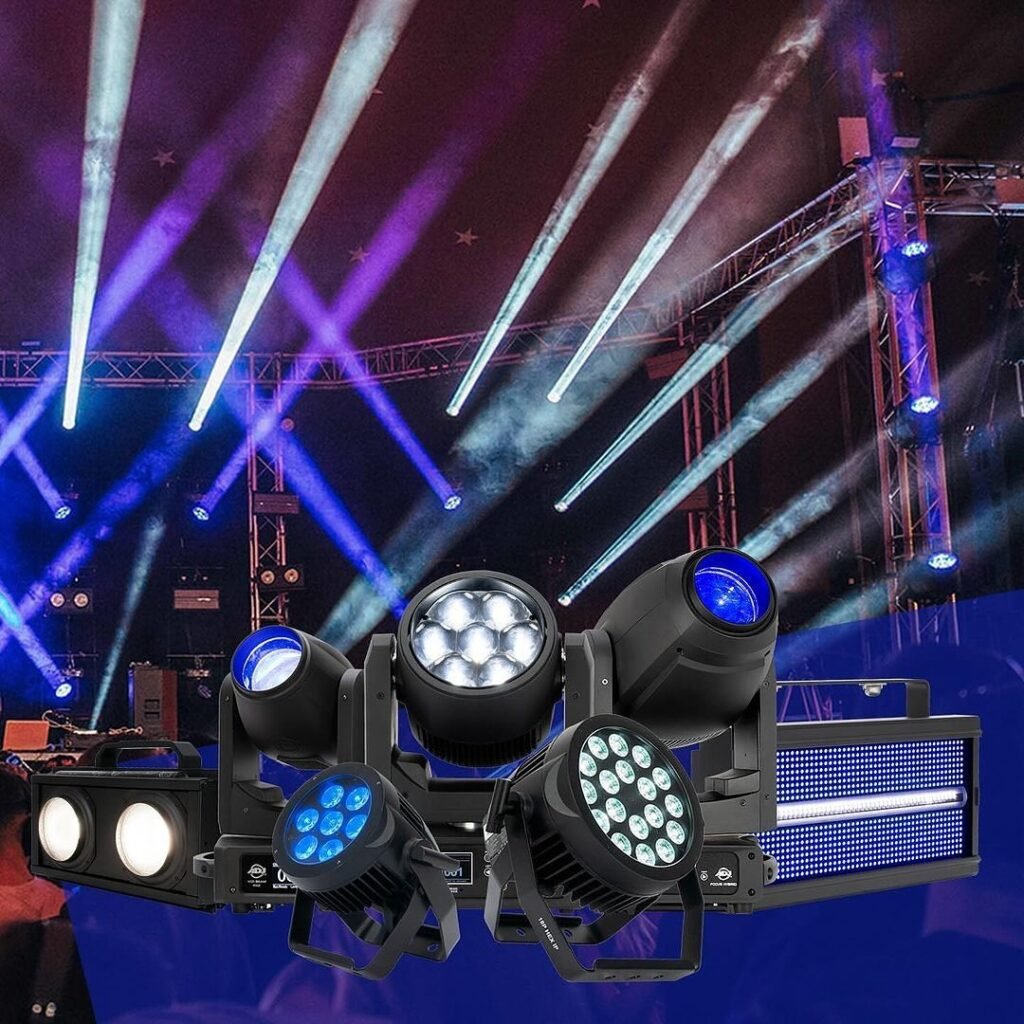
5. What Type of Fixtures Do I Actually Need?
Many buyers purchase equipment they rarely use.
Consider which fixture categories are necessary.
Common options include:
LED PAR Lights
Ideal for:
- Stage washes
- Color effects
- General illumination
Moving Head Lights
Ideal for:
- Dynamic effects
- Concerts
- Entertainment venues
Profile Spotlights
Ideal for:
- Theater productions
- Speaker highlighting
- Precision lighting
Flat Panel Lights
Ideal for:
- Video production
- Live streaming
- Broadcasting
Purchasing the right fixture types prevents unnecessary spending.
6. Is the Equipment Compatible with My Control System?
Compatibility is often overlooked.
Before purchasing, confirm:
- DMX compatibility
- Channel requirements
- Networking capabilities
- Software integration
Fixtures should work seamlessly with existing control systems.
7. What Is the Fixture’s Brightness and Output?
Brightness requirements vary significantly between venues.
Consider:
- Throw distance
- Ambient light levels
- Camera usage
- Audience visibility
A fixture that performs well in a small venue may be insufficient for larger applications.
Always review output specifications before purchasing.
8. Does the Fixture Offer Good Color Performance?
Color quality plays a major role in professional productions.
Important specifications include:
CRI (Color Rendering Index)
High CRI provides:
- Better skin tones
- Accurate colors
- Improved video quality
Color Temperature Control
Adjustable color temperature provides greater flexibility.
High-quality color reproduction is especially important for:
- Broadcast studios
- Houses of worship
- Corporate events
- Theaters
9. What Are the Long-Term Operating Costs?
The purchase price is only part of the equation.
Also consider:
- Energy consumption
- Maintenance costs
- Replacement parts
- Service requirements
LED fixtures generally offer lower lifetime operating costs than older technologies.
Calculating total ownership costs provides a more accurate financial picture.
10. Will the System Support Future Expansion?
Lighting needs often grow over time.
Before purchasing, ask:
- Can additional fixtures be added?
- Does the console support expansion?
- Is there sufficient DMX capacity?
- Can the infrastructure support upgrades?
Planning for growth can save substantial costs in the future.
Bonus Question: Is the Supplier Reliable?
The supplier is often as important as the equipment itself.
Look for:
- Product expertise
- Technical support
- Warranty coverage
- Spare parts availability
- Industry experience
Reliable suppliers can help prevent future operational challenges.
Common Mistakes Buyers Make
Buying Based Only on Price
Low-cost fixtures often create performance and reliability issues.
Ignoring Future Needs
Many systems become obsolete because expansion was not considered.
Overlooking Control Compatibility
Compatibility issues can increase installation costs.
Purchasing Too Many Effects Fixtures
Core lighting should always come before advanced effects.
Failing to Compare Specifications
Not all fixtures perform equally, even when they appear similar.
Example Purchasing Process
A typical purchasing process may include:
- Define venue requirements
- Establish budget
- Identify fixture categories
- Evaluate output requirements
- Verify DMX compatibility
- Compare CRI and color performance
- Review expansion capabilities
- Select a trusted supplier
Following a structured process reduces purchasing risks.
Frequently Asked Questions
What is the most important factor when buying stage lighting?
The intended application and venue requirements should always guide purchasing decisions.
Why is CRI important?
CRI affects color accuracy, skin tone reproduction, and overall visual quality.
Should I buy LED fixtures?
Yes. LED technology offers lower operating costs, longer lifespan, and improved efficiency.
How do I know if a fixture is bright enough?
Review fixture output specifications and compare them with venue dimensions and usage requirements.
Why is future expansion important?
Many venues add fixtures and upgrade systems over time, making scalability essential.
Conclusion
Purchasing professional lighting equipment is a significant investment that requires careful planning and evaluation. By asking the right questions about venue requirements, fixture types, control compatibility, brightness, color performance, operating costs, and future expansion, buyers can make informed decisions that maximize value and long-term performance.
Whether you’re equipping a theater, church, studio, auditorium, concert venue, or event space, taking the time to evaluate your needs before purchasing will help ensure a lighting system that delivers reliable results for years to come.