
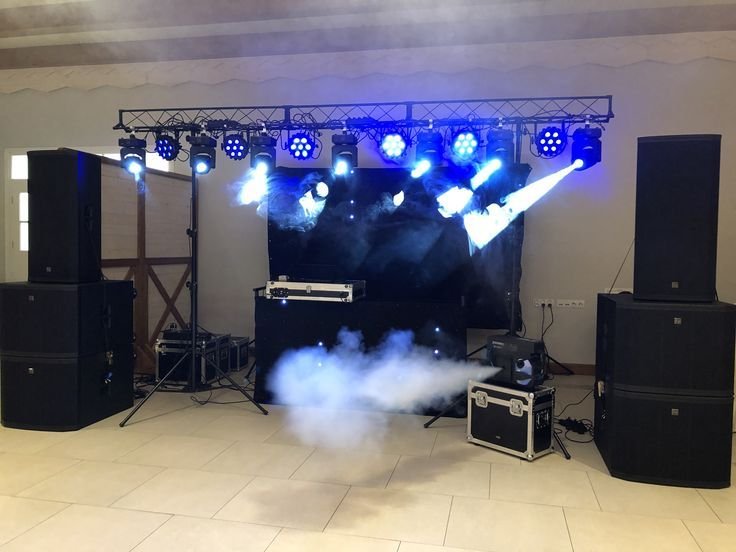
Moving head lights are among the most advanced fixtures used in professional stage lighting. Designed for concerts, theatres, television studios, houses of worship, event venues, and rental companies, these intelligent fixtures contain sophisticated electronic, optical, and mechanical components that work together to produce precise lighting effects.
Like any professional equipment, moving head lights experience wear over time. Cooling fans, LED modules, power supplies, motors, belts, lenses, and control boards may eventually require replacement due to normal use or environmental conditions. Understanding how to replace these components safely helps extend the life of your fixtures, reduce downtime, and maintain consistent lighting performance.
In this guide, we’ll explain which components can be replaced, the signs of failure, and the best practices for servicing professional moving head lights.
Important: Always follow the manufacturer’s service manual and safety instructions. If your fixture is under warranty, unauthorized repairs may void the warranty.
Why Replace Individual Components?
Replacing worn or damaged parts instead of the entire fixture offers several benefits:
- Extends fixture lifespan
- Reduces maintenance costs
- Minimizes production downtime
- Maintains lighting performance
- Improves energy efficiency
- Preserves consistency across lighting rigs
Preventive maintenance is often more economical than replacing an entire lighting system.
Safety Before You Begin
Before opening any moving head fixture:
- Disconnect the power supply.
- Allow the fixture to cool completely.
- Work in a clean, static-free environment.
- Use proper ESD (electrostatic discharge) protection.
- Wear safety glasses when necessary.
- Keep screws and small parts organized.
- Follow the manufacturer’s disassembly procedure.
Never work on a fixture that is connected to electrical power.
Components Commonly Replaced
Professional moving head lights are designed with serviceable components.
These commonly include:
- Cooling fans
- LED light engine
- LED driver
- Power supply
- Pan motor
- Tilt motor
- Drive belts
- Optical lenses
- Color wheels
- Gobo wheels
- Prism assemblies
- Display modules
- Main control board
- DMX input/output connectors
- Power connectors
The availability of replacement parts depends on the manufacturer and fixture model.
Replacing Cooling Fans
Cooling fans are among the most frequently replaced components.
Signs of a failing fan include:
- Excessive noise
- Slow fan speed
- Overheating
- Automatic thermal shutdown
- Fan error messages
Replacement steps:
- Disconnect power.
- Remove the fixture housing.
- Locate the cooling fan.
- Disconnect the fan cable.
- Remove mounting screws.
- Install the new fan in the same orientation.
- Reconnect the cable.
- Test airflow before reassembling the fixture.
Proper cooling helps maximize LED lifespan.
Replacing the LED Module
The LED engine is the primary light source.
Signs it may require replacement include:
- Reduced brightness
- Flickering
- Color inconsistency
- Complete light failure
Replacement generally involves:
- Removing the optical assembly
- Disconnecting LED wiring
- Removing the mounting bracket
- Installing the replacement LED module
- Applying thermal interface material if specified
- Reassembling and testing the fixture
LED replacement should always follow manufacturer specifications to maintain optical alignment.
Replacing the LED Driver
The LED driver regulates electrical current supplied to the light source.
Symptoms of driver failure include:
- Flickering output
- Low brightness
- Random shutdowns
- No light output despite power
Replacing the driver typically requires disconnecting wiring harnesses and installing an identical replacement with matching specifications.
Replacing Pan and Tilt Motors
Moving head fixtures rely on precision motors for accurate positioning.
Signs of motor problems include:
- Jerky movement
- Positioning errors
- Grinding noises
- Calibration failures
- Limited movement
After motor replacement, recalibration is usually required to restore accurate pan and tilt positioning.
Replacing Drive Belts
Many fixtures use timing belts to transfer motor movement.
Replace belts if you notice:
- Slipping movement
- Cracked rubber
- Excessive wear
- Position inaccuracies
Always install belts with the correct tension to prevent premature wear.
Replacing Gobo Wheels
Gobo wheels project patterns and textures.
Replacement may be necessary due to:
- Broken gobos
- Damaged bearings
- Misalignment
- Rotation problems
After installation, verify that gobos rotate smoothly and align correctly.
Replacing Color Wheels
Color wheels can become damaged over time through vibration or impact.
Symptoms include:
- Missing colors
- Color positioning errors
- Cracked filters
- Rotation faults
Handle replacement color filters carefully to avoid fingerprints or scratches.
Replacing Optical Components
Optical parts requiring occasional replacement include:
- Front lenses
- Internal lenses
- Reflectors
- Frost filters
- Diffusers
Always clean optics before deciding replacement is necessary, as dust and residue often reduce performance.
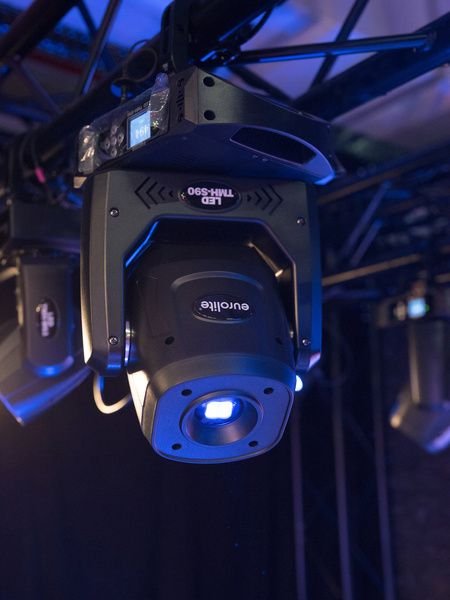
Replacing the Display or Control Panel
If the display stops functioning, operators may be unable to configure the fixture.
Possible symptoms include:
- Blank display
- Unresponsive buttons
- Display flickering
- Navigation failures
Replacing the display module restores local fixture control.
Replacing DMX Connectors
DMX connectors experience repeated plugging and unplugging.
Replace connectors if you notice:
- Loose sockets
- Broken pins
- Signal interruptions
- Physical damage
Faulty DMX connectors can create communication problems throughout an entire lighting network.
Firmware Updates After Repairs
Some repairs require:
- Firmware updates
- Factory reset
- Fixture calibration
- Motor homing
- Sensor recalibration
Always verify that the fixture completes its startup sequence successfully after servicing.
When Should You Replace the Entire Fixture?
Component replacement may no longer be economical if:
- Multiple systems fail simultaneously.
- Spare parts are unavailable.
- Repair costs exceed replacement value.
- The fixture uses obsolete technology.
- Performance no longer meets production requirements.
Modern LED fixtures often provide greater brightness, higher efficiency, quieter operation, and advanced control features.
Preventive Maintenance Tips
Reduce future repairs by:
- Cleaning fixtures after every event.
- Inspecting cooling fans regularly.
- Keeping ventilation openings clear.
- Storing fixtures in protective flight cases.
- Updating firmware when available.
- Performing scheduled inspections.
- Using stable power distribution.
- Avoiding excessive heat and moisture.
Routine maintenance significantly extends equipment lifespan.
Frequently Asked Questions
Can I replace parts in a moving head light myself?
Basic maintenance such as replacing cooling fans, connectors, or belts may be possible for experienced technicians. More complex repairs involving LED modules, power supplies, or control boards should follow the manufacturer’s service documentation and may require qualified service personnel.
What is the most commonly replaced component?
Cooling fans are among the most frequently replaced parts because they operate continuously and are essential for maintaining proper fixture temperatures.
Can replacing the LED module restore brightness?
Yes. If brightness loss results from LED aging, replacing the LED module can restore the fixture’s original light output, provided the optics and driver are also in good condition.
How often should moving head lights be serviced?
Professional fixtures should be inspected regularly, cleaned after major productions, and serviced according to the manufacturer’s recommended maintenance schedule and operating hours.
Is repairing always better than replacing?
Not always. If the fixture is outdated, spare parts are unavailable, or repair costs approach the price of a modern replacement, investing in a new fixture may provide better long-term value.
Conclusion
Replacing components in moving head lights is an effective way to extend equipment life, improve reliability, and reduce operational costs. By understanding how key components such as cooling fans, LED modules, drivers, motors, belts, optical assemblies, and control boards function, lighting professionals can make informed maintenance decisions and keep their lighting systems performing at their best.
Whether you’re maintaining a concert venue, theatre, broadcast studio, church, rental company, or touring production, following proper service procedures and a proactive maintenance schedule will help maximize the lifespan and performance of your professional moving head lighting fixtures.