
Professional stage lighting equipment represents a significant investment for theaters, concert venues, production companies, churches, television studios, schools, and rental businesses. Proper storage is essential to protect that investment, extend equipment lifespan, reduce maintenance costs, and ensure every fixture performs reliably at the next event.
Whether you’re storing equipment between productions, transporting it on tour, or keeping fixtures in long-term warehouse storage, following industry best practices can prevent damage caused by dust, moisture, vibration, impact, and improper handling.
In this guide, we’ll explain how to properly store professional stage lighting equipment and keep your lighting inventory in excellent condition.
Why Proper Storage Matters
Lighting fixtures contain sensitive electronic components, optical systems, motors, LED modules, cooling systems, and control circuits. Poor storage conditions can lead to premature failures, reduced performance, and expensive repairs.
Proper storage helps:
- Extend fixture lifespan
- Prevent physical damage
- Protect optical components
- Reduce maintenance costs
- Maintain lighting performance
- Prevent corrosion
- Improve equipment reliability
- Simplify inventory management
A well-organized storage system also speeds up setup and teardown for future productions.
Clean Equipment Before Storage
Never place dirty lighting fixtures into storage.
After every production:
- Remove dust and dirt from housings
- Clean lenses carefully
- Wipe external surfaces
- Remove haze or smoke residue
- Check ventilation openings
- Inspect cooling fans
- Coil cables properly
Cleaning fixtures before storage prevents dirt from accumulating inside sensitive components.
Allow Fixtures to Cool
Stage lights generate heat during operation.
Before packing:
- Turn off the fixture
- Disconnect power
- Allow complete cooling
- Verify that fans have stopped
Packing hot fixtures can damage lenses, electronics, and protective cases.
Use Protective Flight Cases
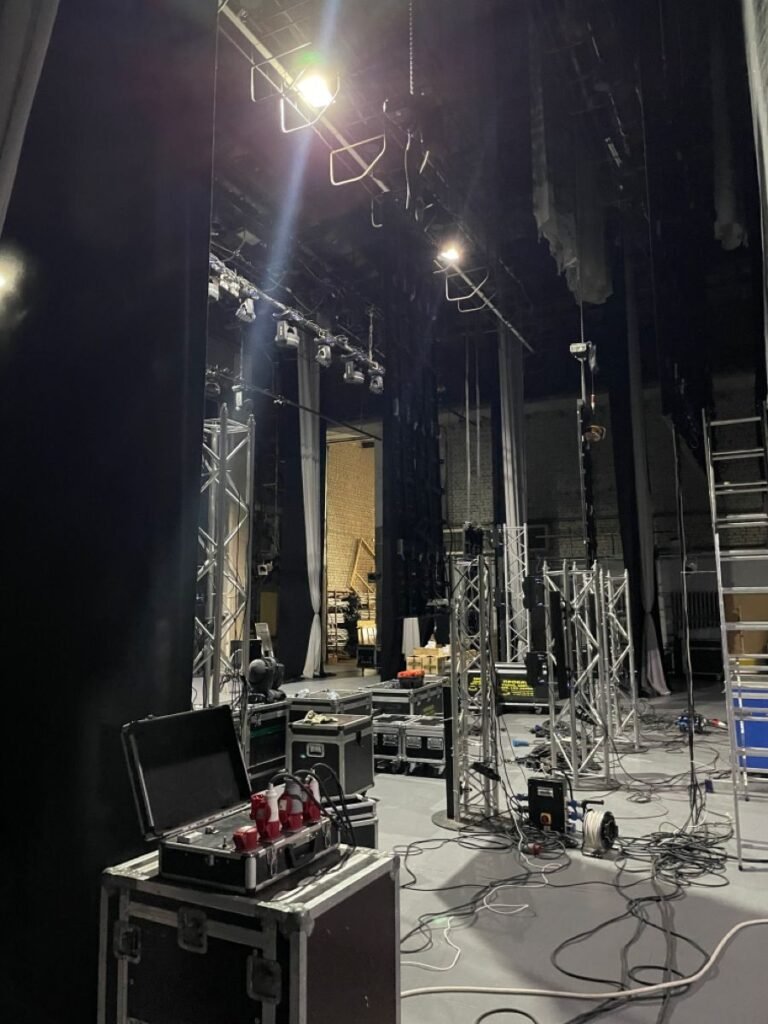
Professional lighting equipment should always be stored in purpose-built flight cases.
Quality flight cases provide:
- Shock protection
- Foam padding
- Moisture resistance
- Organized compartments
- Safe transportation
- Stackable storage
Custom flight cases significantly reduce the risk of damage during transportation and storage.
Store in a Climate-Controlled Environment
Environmental conditions greatly affect lighting equipment.
Ideal storage conditions include:
- Dry environment
- Stable temperature
- Low humidity
- Good ventilation
- Minimal dust
- No direct sunlight
Avoid storing lighting fixtures in damp basements, outdoor sheds, or areas with extreme temperature fluctuations.
Protect Against Moisture
Moisture is one of the biggest threats to electronic equipment.
Excess humidity can cause:
- Corrosion
- Electrical faults
- Mold growth
- Oxidized connectors
- Damaged circuit boards
To reduce moisture exposure:
- Use dehumidifiers when necessary
- Store fixtures above floor level
- Include silica gel packs in flight cases
- Inspect storage areas regularly
These precautions help preserve both electronics and mechanical components.
Store Cables Correctly
Improper cable storage shortens cable lifespan.
Best practices include:
- Coil cables using the over-under method
- Avoid tight bends
- Use reusable cable ties
- Label every cable
- Separate power and data cables
- Store connectors with protective caps
Well-maintained cables reduce setup time and improve system reliability.
Protect Lenses and Optics
Lighting performance depends on clean optical components.
Protect lenses by:
- Installing protective lens covers
- Cleaning before storage
- Avoiding contact with hard surfaces
- Keeping optics free from dust
Never stack equipment directly on exposed lenses.
Secure Moving Parts
Intelligent moving head fixtures contain precision motors.
Before storage:
- Lock pan and tilt mechanisms if available
- Return fixtures to transport positions
- Secure loose accessories
- Remove detachable components when recommended by the manufacturer
Proper handling helps maintain alignment and protects internal mechanisms.
Organize Equipment by Category
Well-organized storage improves efficiency.
Separate equipment into categories such as:
- Moving head beam lights
- Moving head wash lights
- Moving head spot lights
- LED PAR lights
- Lighting consoles
- DMX splitters
- Power distribution units
- Cables
- Clamps
- Safety cables
Clear organization speeds up equipment preparation before every event.
Label Everything
Professional production companies label every item.
Labels should include:
- Equipment ID
- Fixture type
- DMX address range (if applicable)
- Serial number
- Maintenance status
- Storage location
Accurate labeling reduces setup errors and simplifies inventory tracking.
Perform Routine Inspections
Storage should not mean forgetting about your equipment.
Schedule regular inspections to check for:
- Dust accumulation
- Corrosion
- Loose hardware
- Damaged connectors
- Battery condition
- Fan operation
- Software or firmware updates
Routine inspections help identify problems before the next production.
Rotate Equipment
If some fixtures remain unused for extended periods, rotate them into regular productions whenever possible.
Equipment rotation helps:
- Prevent long-term inactivity
- Verify operational status
- Identify developing issues
- Balance equipment wear across the inventory
Regular use often reveals problems before they become major repairs.
Transportation Best Practices
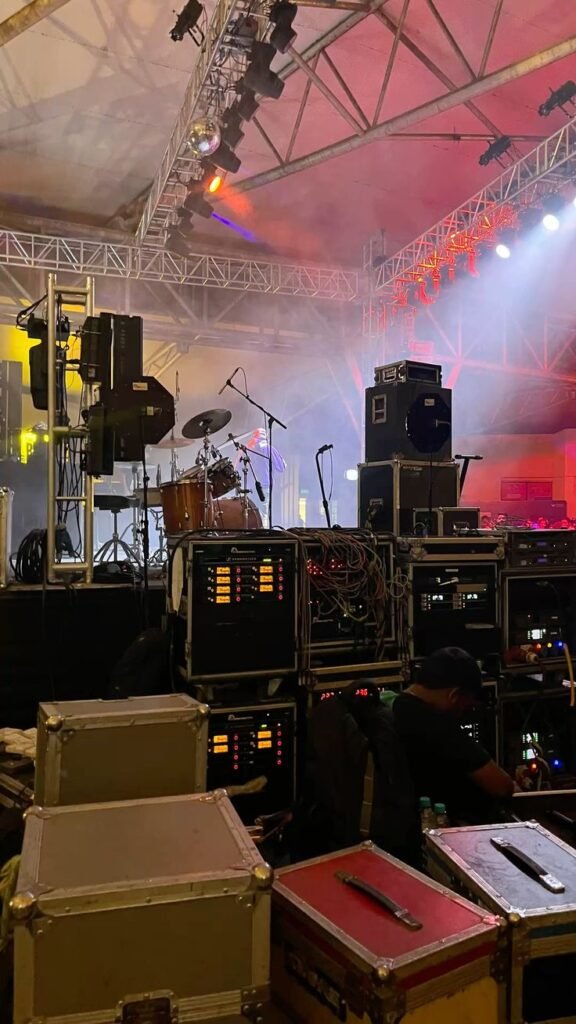
For touring productions and rental companies:
- Use shock-resistant flight cases
- Secure cases during transport
- Avoid stacking beyond weight limits
- Protect equipment from rain
- Minimize vibration during transit
- Inspect fixtures after arrival
Proper transportation is just as important as proper warehouse storage.
Common Storage Mistakes
Avoid these common errors:
- Packing hot fixtures
- Storing equipment in humid environments
- Leaving lenses uncovered
- Wrapping cables too tightly
- Mixing power and data cables
- Failing to clean fixtures before storage
- Overloading flight cases
- Ignoring routine inspections
Correct storage practices significantly reduce equipment failures and repair costs.
Frequently Asked Questions
How should stage lighting equipment be stored?
Professional lighting fixtures should be cleaned, cooled, packed in protective flight cases, and stored in a clean, dry, climate-controlled environment away from excessive dust and moisture.
Why are flight cases important?
Flight cases protect lighting equipment from impact, vibration, dust, and moisture during storage and transportation, significantly extending equipment lifespan.
Can lighting fixtures be stored in a warehouse?
Yes, provided the warehouse is clean, dry, well-ventilated, and protected from extreme temperatures and humidity.
Should cables be stored separately?
Yes. Power cables, DMX cables, and networking cables should be coiled correctly, labeled, and stored separately to prevent damage and simplify setup.
How often should stored lighting equipment be inspected?
Professional production companies typically inspect stored equipment regularly, especially before major productions, to ensure every fixture remains fully operational.
Conclusion
Proper storage is essential for protecting professional stage lighting equipment and maximizing its service life. By cleaning fixtures after every event, using protective flight cases, maintaining climate-controlled storage conditions, organizing equipment systematically, and performing regular inspections, production teams can reduce maintenance costs and improve reliability.
Whether you’re managing a concert venue, theatre, broadcast studio, rental company, church, or touring production, implementing effective storage practices ensures your lighting equipment remains ready to deliver outstanding performance for every event.