
Arena concerts represent the highest level of live entertainment production. Every performance is designed to deliver a spectacular experience for thousands of fans, combining powerful music, stunning visuals, synchronized lighting, massive LED screens, and special effects into one unforgettable show. Behind these productions is a team of experienced concert lighting designers who carefully plan every beam, color, movement, and cue long before the audience enters the venue.
Designing lighting for an arena show requires far more than choosing bright fixtures. Lighting designers must balance creativity with engineering, ensuring the system performs consistently in large venues while adapting to different stage layouts, audience sightlines, and touring schedules.
In this guide, we’ll take a behind-the-scenes look at how professional concert lighting designers build arena shows from concept to performance.
Understanding the Artist’s Vision
Every arena lighting design begins with the artist and creative team.
Before selecting equipment, lighting designers work closely with:
- Artists
- Tour directors
- Production managers
- Stage designers
- Video designers
- Choreographers
- Creative directors
Together, they define the visual style of the tour, ensuring the lighting reflects the artist’s music, branding, and stage presence.
Questions often discussed include:
- What emotions should each song create?
- Will the show feature cinematic storytelling or high-energy visuals?
- How much interaction should there be with the audience?
- Will the performance include pyrotechnics, lasers, or video content?
The answers influence every aspect of the lighting design.
Designing the Stage Layout
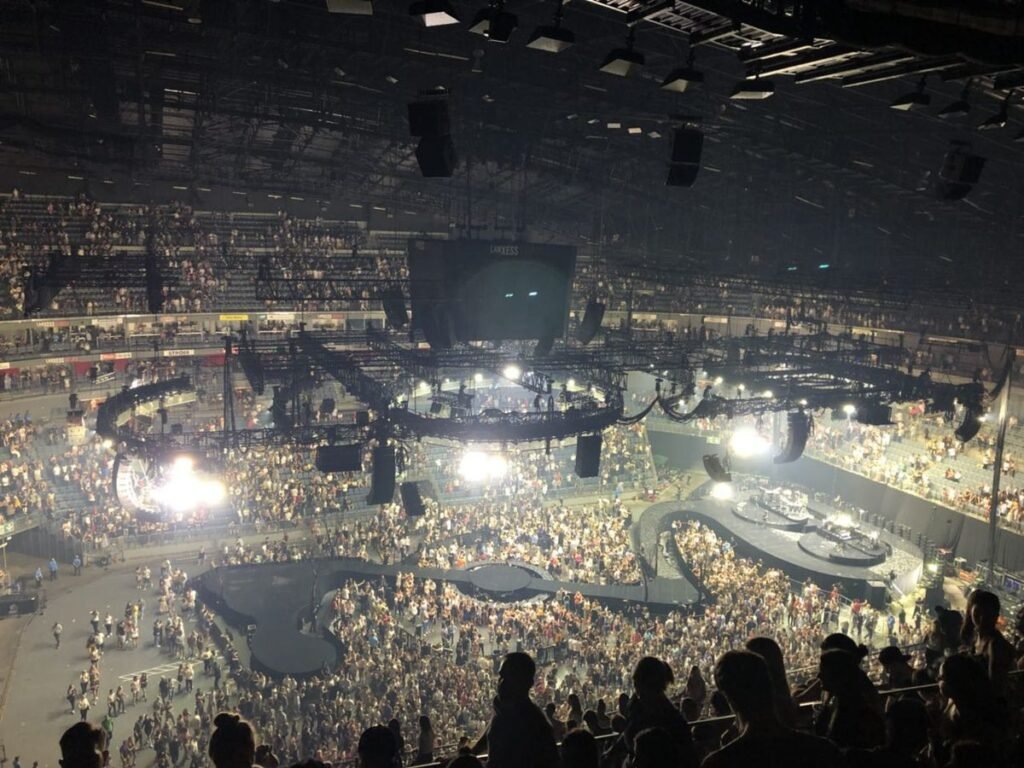
Once the creative direction is established, designers create a lighting plot that determines where every fixture will be positioned.
The layout typically includes:
- Front trusses
- Rear trusses
- Side lighting towers
- Floor lighting positions
- Audience lighting locations
- Follow spot positions
- LED video integration points
Every fixture is placed to maximize coverage while maintaining balanced lighting from every viewing angle.
Selecting Professional Lighting Fixtures
Arena productions rely on a combination of intelligent lighting fixtures, each serving a specific purpose.
Moving Head Beam Lights
Beam fixtures create powerful aerial effects that can be seen throughout large arenas.
They are ideal for:
- Concert openings
- High-energy songs
- Audience sweeps
- Dramatic finales
Moving Head Wash Lights
Wash fixtures provide broad, even illumination across the stage.
Their primary roles include:
- Performer visibility
- Stage coverage
- Background lighting
- Camera-friendly illumination
Moving Head Spot Lights
Spot fixtures deliver precision lighting while supporting advanced features such as:
- Gobo projection
- Motorized zoom
- Rotating prisms
- Focus adjustment
- Framing shutters
These fixtures highlight performers and create dramatic visual effects.
LED Blinders and Effect Fixtures
Arena shows also incorporate:
- LED blinders
- Pixel bars
- Strobe lights
- Audience lights
- Decorative LED fixtures
These elements increase audience engagement and add energy to key moments.
Creating Layers of Light
Professional lighting designers rarely rely on a single lighting effect.
Instead, they build multiple lighting layers, including:
- Key lighting
- Fill lighting
- Backlighting
- Beam effects
- Audience lighting
- Scenic lighting
- Accent lighting
- Special effects
Layering creates depth, dimension, and visual interest throughout the performance.
Programming the Show
After installation, lighting programmers begin creating the show.
Programming involves:
- Fixture groups
- Color palettes
- Position presets
- Cue lists
- Beam movements
- Pixel mapping effects
- Transition timing
- Synchronization with music
Large arena productions may contain hundreds or even thousands of programmed lighting cues.
Synchronizing with Music and Video
Modern arena shows synchronize lighting with:
- Live music
- Timecode
- LED video walls
- Media servers
- Lasers
- Pyrotechnics
- Stage automation
Timecode ensures every cue occurs at precisely the right moment, allowing lighting, video, and special effects to operate as one coordinated production.
Managing Large DMX Networks
Arena productions often control hundreds of lighting fixtures simultaneously.
To maintain reliability, designers use advanced networking technologies such as:
- DMX512
- Art-Net
- sACN
- Ethernet switches
- Network processors
Carefully planned network architecture ensures stable communication throughout the show.
Rehearsals and Show Refinement
Before opening night, lighting designers spend days or weeks refining the production.
Rehearsals focus on:
- Cue timing
- Color consistency
- Fixture positioning
- Performer visibility
- Camera compatibility
- Video synchronization
- Audience sightlines
Many adjustments are made during rehearsals to improve the overall visual experience.
Adapting to Different Arenas
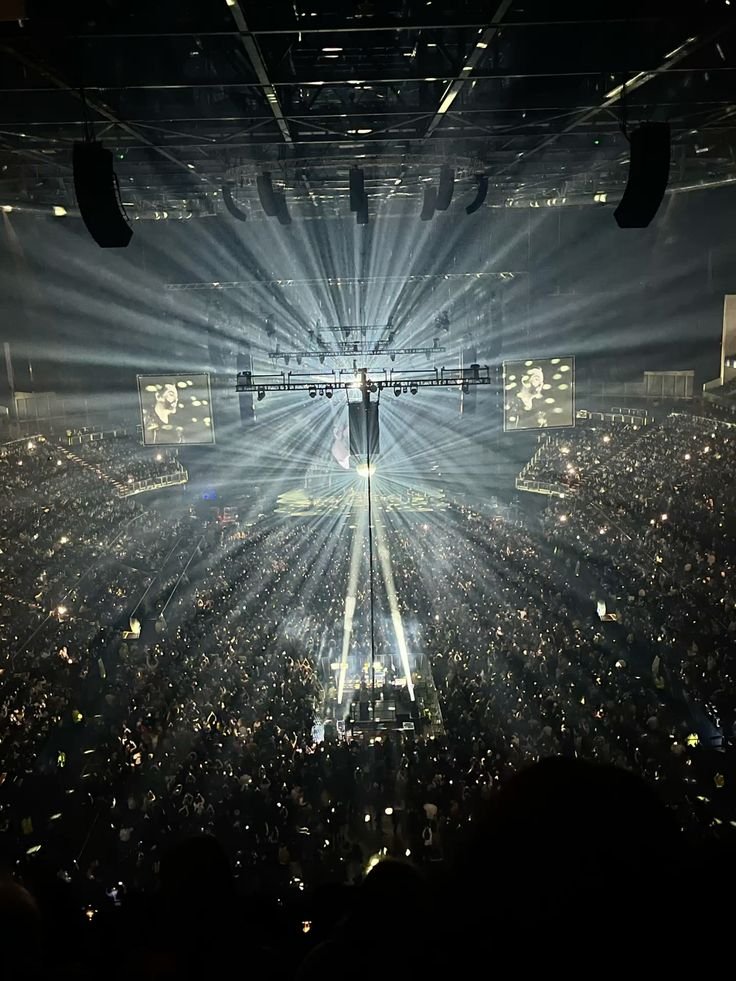
No two arenas are identical.
Lighting designers must adjust each production based on:
- Ceiling height
- Rigging capacity
- Stage dimensions
- Audience seating
- Local power infrastructure
- Broadcast requirements
Touring lighting systems are designed to remain flexible while preserving the show’s original creative vision.
Safety Behind the Scenes
Safety is a top priority during every arena production.
Professional crews follow strict procedures for:
- Truss inspections
- Fixture safety cables
- Load calculations
- Electrical testing
- Cable management
- Emergency backup systems
Proper safety planning protects both performers and crew members.
Emerging Technologies in Arena Lighting
Modern arena productions increasingly incorporate:
- AI-assisted lighting programming
- Wireless DMX systems
- Motorized zoom fixtures
- RGBAL LED engines
- Pixel mapping
- Cloud-based diagnostics
- Real-time fixture monitoring
- Sustainable LED lighting technology
These innovations provide greater creative flexibility while improving efficiency and reliability.
Frequently Asked Questions
How many lights are used in an arena concert?
Large arena productions often use hundreds of intelligent lighting fixtures, including beam, wash, spot, audience, and effect lights. The exact number depends on the artist, stage design, and production scale.
Why do arena concerts use moving head lights?
Moving head fixtures provide automated movement, color changes, beam effects, gobos, zoom, and precision positioning, making them essential for dynamic live performances.
How long does it take to design an arena lighting show?
Depending on the complexity of the production, lighting design and programming may take several weeks or even months before the tour begins.
Why is timecode important in arena productions?
Timecode synchronizes lighting, music, video, lasers, and special effects, ensuring every performance remains consistent across multiple venues.
What skills do concert lighting designers need?
Professional lighting designers require expertise in lighting design, programming, DMX networking, color theory, stage production, visual storytelling, and live event coordination.
Conclusion
Building an arena concert lighting show is a collaborative process that combines artistic creativity, technical expertise, and meticulous planning. From understanding the artist’s vision to designing fixture layouts, programming intelligent lighting, synchronizing multimedia systems, and adapting to different venues, every step contributes to an unforgettable live experience.
Whether you’re producing an arena tour, a major music festival, or a large-scale indoor concert, investing in professional lighting design, advanced control systems, and high-quality LED fixtures ensures spectacular performances that captivate audiences from the opening song to the final encore.