
Choosing the right stage lighting is one of the most important decisions for any venue. Whether you operate a theater, church, concert hall, school auditorium, television studio, conference center, nightclub, or event venue, the lighting system directly affects visibility, audience engagement, production quality, and overall user experience.
With hundreds of lighting products available on the market, selecting the right fixtures can feel overwhelming. Understanding your venue’s requirements and matching them with the appropriate lighting equipment will help maximize performance while avoiding unnecessary costs.
In this guide, we’ll explain how to choose professional stage lighting for your venue and the key factors you should consider before making an investment.
Why Choosing the Right Stage Lighting Matters
Professional stage lighting does much more than illuminate performers.
A properly designed system helps:
- Improve visibility
- Enhance audience experience
- Create atmosphere
- Support storytelling
- Improve video production quality
- Increase venue flexibility
- Support future events
The right lighting system can transform an ordinary venue into a professional performance environment.
Start by Identifying Your Venue Type
Different venues require different lighting solutions.
Theater Venues
Theaters typically require:
- Profile spotlights
- Fresnel fixtures
- Follow spot lights
- Stage wash lighting
The focus is often on storytelling and actor visibility.
Churches and Worship Centers
Churches commonly use:
- LED PAR lights
- Flat panel lights
- Moving head fixtures
- Broadcast lighting
These systems must support both in-person worship and live streaming.
Concert Venues
Concert venues often require:
- Moving head beam lights
- Moving head spot lights
- Moving head wash lights
- Effects lighting
Dynamic visuals are a major priority.
School Auditoriums
Schools benefit from flexible systems capable of supporting:
- Assemblies
- Theater productions
- Concerts
- Graduation ceremonies
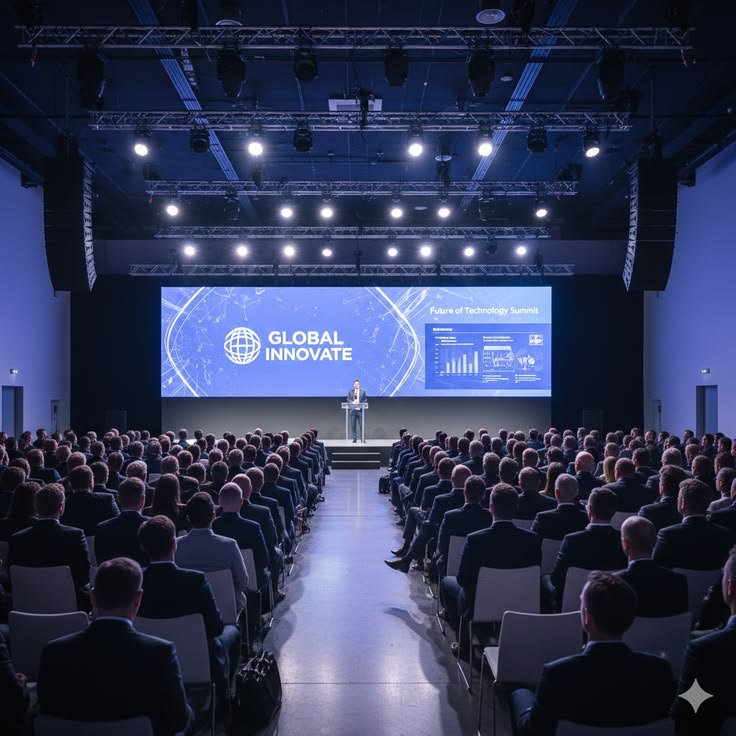
Conference Centers
Conference venues prioritize:
- Speaker visibility
- Presentation lighting
- Branding support
- Video recording quality
Understanding your venue’s primary use helps determine the most suitable lighting equipment.
Evaluate Venue Size
Venue dimensions significantly influence fixture selection.
Consider:
Stage Width
Larger stages require more fixtures for even coverage.
Stage Depth
Deeper stages often require additional lighting positions.
Ceiling Height
Higher mounting positions may require higher-output fixtures.
Audience Distance
Long viewing distances require greater brightness levels.
Accurate measurements help determine equipment requirements.
Determine Your Lighting Goals
Different venues have different objectives.
Your lighting system may focus on:
- Visibility
- Atmosphere
- Entertainment
- Broadcast quality
- Branding
- Flexibility
Defining priorities helps simplify equipment selection.
Essential Lighting Fixtures for Most Venues
Most professional venues use a combination of fixture types.
LED PAR Lights
LED PAR fixtures are among the most versatile stage lighting products.
Applications include:
- Stage washes
- Color effects
- General illumination
Benefits:
- Energy efficiency
- Long lifespan
- Low maintenance
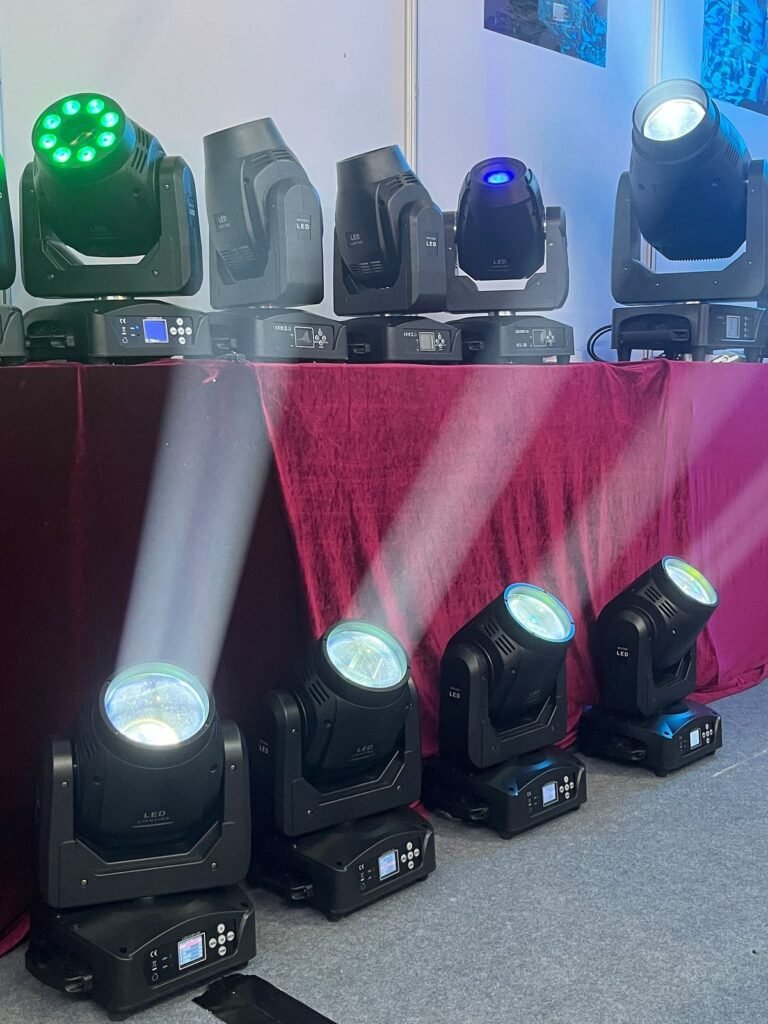
Moving Head Lights
Moving heads provide flexibility and dynamic effects.
They offer:
- Pan and tilt movement
- Color changes
- Beam effects
- Automated operation
Popular categories include:
Moving Head Beam Lights
Used for:
- Aerial effects
- Concert productions
- Visual impact
Moving Head Spot Lights
Used for:
- Gobo projection
- Performer highlighting
Moving Head Wash Lights
Used for:
- Stage coverage
- Atmospheric lighting
Profile Spotlights
Ideal for:
- Theaters
- Corporate events
- Speaker highlighting
They provide precise beam control and shaping.
Fresnel Lights
Fresnel fixtures create soft, natural-looking illumination.
Popular in:
- Theaters
- Television studios
- Houses of worship
Flat Panel Lights
Widely used for:
- Broadcasting
- Live streaming
- Video production
They produce soft, even lighting.
Consider Indoor vs Outdoor Applications
Venue location plays a major role in fixture selection.
Indoor Venues
Typically use standard fixtures.
Outdoor Venues
Require:
- Waterproof fixtures
- Weather-resistant housings
- Appropriate IP ratings
Outdoor environments often require IP65 or higher-rated lighting equipment.
Pay Attention to Brightness Requirements
Fixture output should match venue size and application.
Factors affecting brightness include:
- Stage dimensions
- Ambient lighting
- Camera usage
- Audience distance
Underpowered systems often fail to provide adequate coverage.
Understand Beam Angles
Beam angle determines how light spreads.
Narrow Beam Angles
Best for:
- Long-distance projection
- Beam effects
- Highlighting performers
Wide Beam Angles
Best for:
- Stage washes
- General illumination
Choosing the correct beam angle improves lighting efficiency.
Why High CRI Matters
CRI (Color Rendering Index) measures color accuracy.
High CRI fixtures provide:
- Better skin tones
- Accurate colors
- Improved video quality
For professional applications, CRI ratings above 95 are highly recommended.
Choose the Right Color Temperature
Color temperature affects visual appearance.
Common options include:
3200K
Produces warm white light.
Popular in theater environments.
5600K
Produces daylight-balanced illumination.
Popular for broadcast and video production.
Consistency across fixtures is important.
Consider DMX Lighting Control
Most professional venues use DMX512 control systems.
Benefits include:
- Centralized operation
- Scene programming
- Automated transitions
- Fixture synchronization
DMX provides the flexibility needed for modern productions.
Plan for Future Expansion
Many venues expand their lighting systems over time.
When selecting equipment, consider:
- Additional fixture capacity
- Future DMX channels
- Network integration
- Venue growth
Scalable systems provide long-term value.
Evaluate Energy Efficiency
LED technology has become the industry standard because it offers:
- Lower power consumption
- Reduced heat generation
- Longer lifespan
- Lower maintenance costs
Most modern venues choose LED fixtures for these reasons.
Common Mistakes When Choosing Stage Lighting
Buying Based Only on Price
Low-cost fixtures may create reliability problems.
Ignoring Venue Requirements
Every venue has unique needs.
Choosing Too Few Fixtures
Insufficient coverage can limit production quality.
Overlooking Control Systems
A lighting system is only as effective as its control infrastructure.
Neglecting Future Growth
Expansion planning reduces future upgrade costs.
Example Venue Lighting Packages
Small Venue
- 8 LED PAR Lights
- 2 Moving Head Spot Lights
- DMX Controller
Medium Venue
- 16 LED PAR Lights
- 4 Moving Head Wash Lights
- 4 Moving Head Spot Lights
- DMX Console
Large Venue
- 24 LED PAR Lights
- 8 Moving Head Beam Lights
- 8 Moving Head Wash Lights
- 8 Moving Head Spot Lights
- Professional Lighting Console
Actual requirements will vary depending on venue design and application.
Frequently Asked Questions
What stage lights are best for beginners?
LED PAR lights are often the best starting point because they are versatile and easy to use.
How many lights does a stage need?
The number depends on stage size, lighting goals, and venue requirements.
Are moving head lights worth it?
Yes. They provide flexibility, automation, and professional visual effects.
What is the best lighting control system?
DMX512 remains the most widely used professional lighting control standard.
Should venues choose LED lighting?
Yes. LED fixtures provide better efficiency, lower maintenance, and longer operational life than most traditional lighting technologies.
Conclusion
Choosing professional stage lighting requires balancing venue size, application requirements, fixture types, brightness levels, control systems, and future growth plans. By selecting the right combination of LED PAR lights, moving head fixtures, spotlights, and control equipment, venues can create professional lighting systems that enhance performances, improve audience experiences, and support long-term operational success.
Whether you’re designing a theater, church, auditorium, concert venue, conference center, or studio, investing in the right lighting system is one of the most valuable decisions you can make for your venue.