
Outdoor concerts present exciting opportunities for event organizers, but they also introduce unique lighting challenges that don’t exist in indoor venues. Weather conditions, power distribution, audience size, venue layout, and visibility requirements all play a major role in determining the success of an outdoor lighting system.
A well-planned outdoor concert lighting setup enhances audience engagement, improves performer visibility, supports live streaming and video production, and creates unforgettable experiences.
In this guide, we’ll cover everything event organizers need to know about planning and implementing professional outdoor concert lighting.
Why Lighting Is Critical for Outdoor Concerts
Lighting is one of the most important elements of any live music event.
Professional lighting helps:
- Enhance audience experience
- Highlight performers
- Create atmosphere
- Support stage effects
- Improve event branding
- Increase production value
- Improve photo and video quality
Without proper lighting, even a great performance can lose visual impact.
Unique Challenges of Outdoor Concert Lighting
Outdoor events face challenges that indoor venues rarely encounter.
Weather Conditions
Outdoor fixtures may be exposed to:
- Rain
- Humidity
- Wind
- Dust
- Extreme temperatures
Weather-resistant equipment is essential.
Ambient Light
Daytime events and city environments often compete with stage lighting.
Designers must account for:
- Sunlight
- Street lighting
- Building illumination
Power Distribution
Outdoor venues may require:
- Temporary power systems
- Generators
- Long cable runs
Proper planning prevents power issues.
Large Coverage Areas
Outdoor stages often require higher-output fixtures than indoor productions.
Start with Venue Assessment
Before selecting lighting equipment, evaluate the venue.
Important factors include:
Stage Size
Determine:
- Width
- Depth
- Height
These measurements influence fixture quantity and placement.
Audience Area
Estimate:
- Audience capacity
- Viewing distances
- Seating layout
Rigging Opportunities
Identify available:
- Truss systems
- Ground support structures
- Roof systems
Power Availability
Calculate electrical requirements before selecting fixtures.
A thorough site assessment reduces unexpected problems during setup.
Choose Weatherproof Lighting Fixtures
Outdoor productions should prioritize waterproof equipment.
Most professional event organizers choose fixtures with:
IP65 Rating
Provides protection against:
- Rain
- Dust
- Water spray
Suitable for most outdoor concerts.
IP66 Rating
Offers additional protection for harsher conditions.
Weatherproof fixtures help ensure uninterrupted performance.
Essential Outdoor Concert Lighting Fixtures
A professional outdoor concert typically uses multiple fixture types.
Moving Head Beam Lights
Used for:
- Aerial effects
- Audience sweeps
- High-energy visuals
These fixtures are a staple of modern concert productions.
Moving Head Spot Lights
Provide:
- Gobo projections
- Performer highlighting
- Pattern effects
Moving Head Wash Lights
Create:
- Color washes
- Stage coverage
- Atmospheric effects
LED PAR Lights
Used for:
- Front lighting
- Stage illumination
- Truss lighting
Follow Spot Lights
Track performers during live performances.
Particularly useful for large stages.
Strobe Lights
Add excitement during musical peaks and dramatic moments.
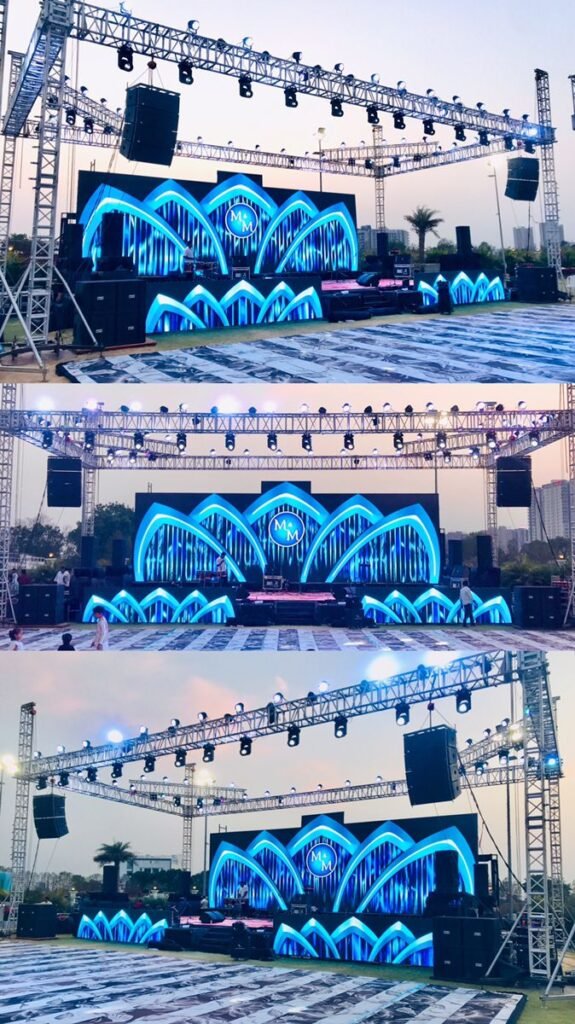
Design a Balanced Lighting Layout
Effective fixture placement is just as important as fixture selection.
Front Lighting
Ensures performers remain visible.
Side Lighting
Adds depth and dimension.
Back Lighting
Creates separation from the background.
Overhead Lighting
Provides coverage and effects.
Audience Lighting
Engages spectators and creates immersive experiences.
A layered approach produces the most professional results.
Plan for Video and Live Streaming
Many outdoor concerts are:
- Live streamed
- Recorded
- Broadcast online
Lighting should support camera requirements.
Best practices include:
- Consistent color temperature
- High CRI fixtures
- Even performer illumination
Proper broadcast lighting improves video quality significantly.
Use DMX Control Systems
Professional concert productions rely on DMX lighting control.
Benefits include:
- Centralized operation
- Automated programming
- Scene management
- Fixture synchronization
DMX remains the standard control protocol for entertainment lighting.
Build Dynamic Lighting Scenes
Concert audiences expect visual excitement.
Programming should include:
Intro Scenes
Build anticipation before performances begin.
Verse Looks
Support calmer musical sections.
Chorus Looks
Increase intensity and audience engagement.
Solo Highlights
Direct focus to featured performers.
Finale Sequences
Deliver memorable visual conclusions.
Dynamic programming elevates the entire concert experience.
Add Atmospheric Effects
Many outdoor concerts incorporate special effects.
Popular options include:
- Haze machines
- Fog machines
- Lasers
- CO₂ jets
- Spark machines
These effects enhance lighting visibility and audience excitement.
Power Planning and Distribution
Power management is critical for outdoor productions.
Consider:
- Fixture wattage
- Generator capacity
- Distribution systems
- Redundancy planning
Reliable power systems reduce the risk of production interruptions.
Safety Considerations
Safety should always be a priority.
Secure Fixtures Properly
Use:
- Safety cables
- Approved clamps
- Certified rigging hardware
Protect Electrical Equipment
Keep connections protected from moisture and damage.
Monitor Weather Conditions
Have contingency plans for severe weather.
Professional safety practices protect both equipment and attendees.
Common Outdoor Concert Lighting Mistakes
Using Indoor Fixtures Outdoors
Indoor fixtures are not designed for weather exposure.
Underestimating Fixture Output
Outdoor venues often require more brightness than expected.
Poor Fixture Placement
Incorrect positioning can reduce effectiveness.
Ignoring Backup Systems
Redundancy is important for large events.
Overusing Effects
Too many effects can distract from the performance.
Balance creates better audience experiences.
Example Outdoor Concert Lighting Package
A medium-sized outdoor concert may include:
- 12 Moving Head Beam Lights
- 8 Moving Head Spot Lights
- 8 Moving Head Wash Lights
- 16 LED PAR Lights
- 2 Follow Spot Lights
- 4 Strobe Lights
- DMX Lighting Console
- Truss System
- Power Distribution Equipment
This setup provides versatility for most live music events.
Frequently Asked Questions
What lighting is used for outdoor concerts?
Most outdoor concerts use moving head beam lights, spot lights, wash lights, LED PAR lights, and follow spots.
Do outdoor concert lights need to be waterproof?
Yes. IP65 or higher-rated fixtures are strongly recommended for outdoor use.
Why are moving head lights popular in concerts?
They provide movement, color changes, beam effects, and dynamic visual impact.
What control system is used for concert lighting?
Most professional productions use DMX512-based control systems.
How bright should outdoor concert lighting be?
Brightness depends on stage size, audience distance, and environmental conditions, but outdoor events generally require higher-output fixtures than indoor venues.
Conclusion
Successful outdoor concert lighting requires careful planning, weather-resistant equipment, strategic fixture placement, reliable power distribution, and professional programming. By combining the right fixtures, control systems, and design principles, event organizers can create engaging visual experiences that enhance performances and leave lasting impressions on audiences.
Whether you’re organizing a local music event, festival, touring production, or large-scale outdoor concert, investing in professional lighting design is one of the most effective ways to elevate the overall production quality.