
Moving head lights have become one of the most important fixtures in modern stage lighting. Their ability to move, change colors, project patterns, and create dynamic effects makes them a popular choice for concerts, churches, theaters, event venues, television studios, nightclubs, and corporate productions.
However, choosing the wrong moving head light can result in poor coverage, insufficient brightness, limited effects, or unnecessary expenses.
The best moving head light for your venue depends on several factors, including venue size, ceiling height, event type, audience distance, and lighting objectives.
In this guide, we’ll explain how to choose the right moving head light for your venue and avoid costly purchasing mistakes.
Why Venue Size Matters
One of the biggest mistakes buyers make is selecting fixtures without considering venue dimensions.
A moving head light that performs well in a small church or conference room may not provide enough output for a large concert venue.
Before purchasing, evaluate:
- Venue width
- Venue depth
- Ceiling height
- Audience distance
- Mounting locations
These factors directly affect the type and power of fixture required.
Understand the Different Types of Moving Head Lights
Before choosing a fixture, it’s important to understand the three main categories.
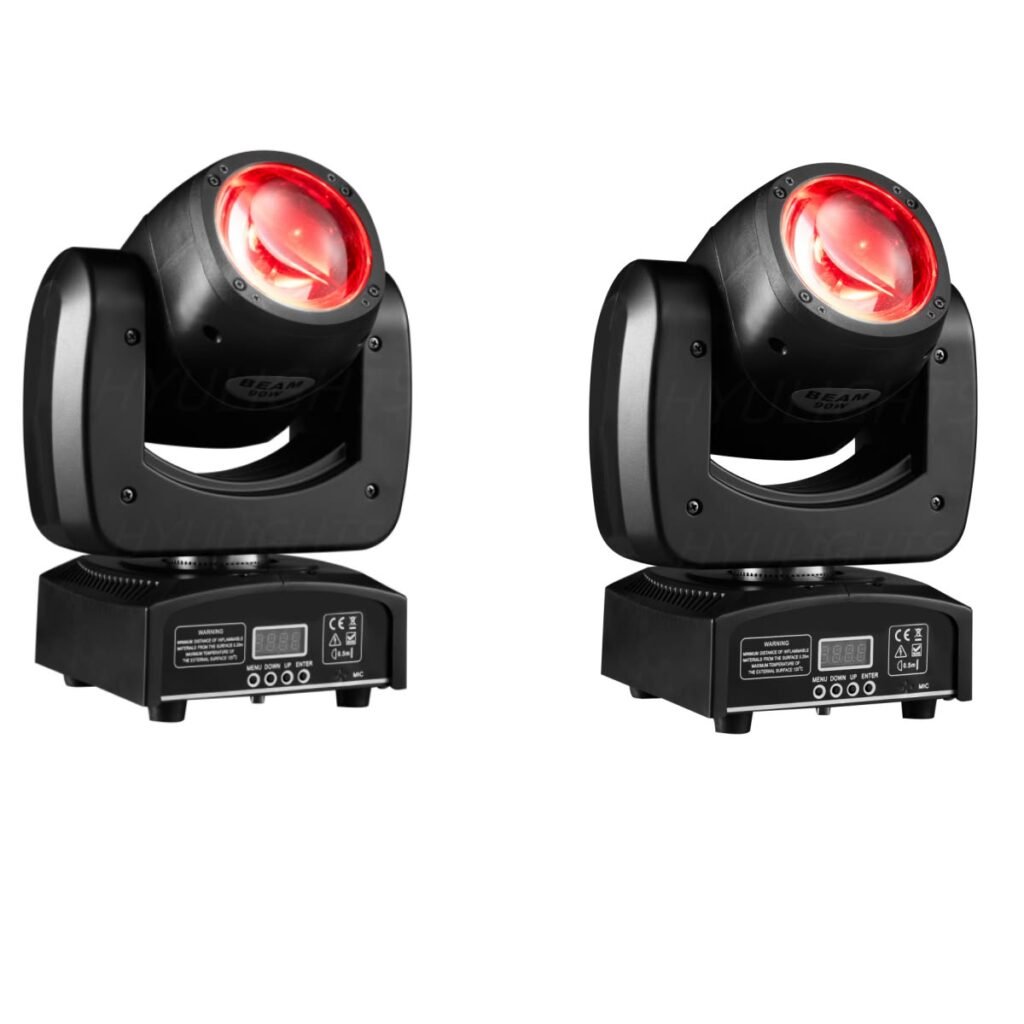
Beam Moving Head Lights
Beam fixtures produce narrow, concentrated beams designed for long-distance projection.
Best for:
- Concerts
- Festivals
- Nightclubs
- Outdoor events
- Large venues
Beam fixtures create dramatic aerial effects and are highly visible when used with haze or fog.
Spot Moving Head Lights
Spot fixtures provide focused illumination and can project gobos, logos, and patterns.
Best for:
- Theaters
- Churches
- Corporate events
- Stage productions
- Multi-purpose venues
They offer excellent versatility and precise targeting.
Wash Moving Head Lights
Wash fixtures create broad and even illumination.
Best for:
- Stage coverage
- Worship stages
- Event halls
- Background lighting
- Performance venues
Wash fixtures excel at creating mood and color effects.
Hybrid Moving Head Lights
Hybrid fixtures combine beam, spot, and wash functions.
Best for:
- Multi-purpose venues
- Rental companies
- Touring productions
- Venues with diverse event requirements
They offer flexibility but are typically more expensive.
Consider Ceiling Height
Ceiling height has a major impact on fixture selection.
Low Ceilings
Venues with lower ceilings generally benefit from:
- Wash fixtures
- Compact moving heads
- Wide beam angles
High Ceilings
Venues with tall ceilings often require:
- Beam fixtures
- Higher output fixtures
- Longer throw distances
The greater the mounting height, the more powerful the fixture must be.
Evaluate Venue Type
Different venues require different lighting solutions.
Churches
Most churches prioritize:
- Wash lights for stage coverage
- Spot lights for speakers and worship leaders
Many churches use beam fixtures only for concerts and special productions.
Theaters
Theaters commonly use:
- Spot moving heads
- Wash moving heads
These fixtures support storytelling, scene transitions, and actor highlighting.
Concert Venues
Concert environments typically require:
- Beam fixtures
- Spot fixtures
- Wash fixtures
Professional concert systems often combine all three.
Corporate Event Venues
Corporate productions usually favor:
- Spot fixtures
- Wash fixtures
These fixtures provide professional presentation lighting without excessive visual effects.
Nightclubs
Nightclubs frequently prioritize:
- Beam fixtures
- Effect lighting
- Fast-moving programmed shows
Strong aerial effects are often the primary objective.
Determine Required Brightness
Brightness is often measured in watts or light output.
Typical examples include:
Small Venues
- 100W–230W moving heads
Medium Venues
- 230W–295W moving heads
Large Venues
- 380W and above
Larger venues generally require higher-output fixtures to maintain visibility across greater distances.
Check Beam Angle Requirements
Beam angle determines light spread.
Narrow Beam Angles
Ideal for:
- Long throws
- Beam effects
- Concert productions
Medium Beam Angles
Ideal for:
- Spot applications
- Stage presentations
- Theaters
Wide Beam Angles
Ideal for:
- Wash effects
- General stage illumination
- Church lighting
Understanding beam angle requirements helps ensure proper coverage.
Consider DMX Compatibility
Most professional moving head lights use DMX512 control systems.
Before purchasing, verify:
- DMX compatibility
- Channel requirements
- Controller compatibility
- Programming capabilities
A fixture should integrate seamlessly into your existing lighting system.
Indoor vs Outdoor Applications
Environmental conditions matter.
Indoor Venues
Standard moving heads are generally sufficient.
Outdoor Venues
Outdoor installations should prioritize:
- Waterproof construction
- IP-rated protection
- Weather resistance
This is especially important for festivals, concerts, and permanent outdoor installations.
Evaluate Color and Effects Features
Different fixtures provide different creative capabilities.
Important features include:
- RGB color mixing
- Color wheels
- Gobos
- Prisms
- Frost filters
- Zoom systems
- Strobe effects
Choose features based on your production requirements.
Consider Maintenance and Operating Costs
Long-term ownership costs should not be overlooked.
LED fixtures typically offer:
- Lower power consumption
- Longer lifespan
- Reduced maintenance
- Lower operating costs
Many venues now prefer LED moving heads because of their efficiency and reliability.
Common Buying Mistakes
Buying Based Only on Price
Low-cost fixtures may offer poor performance and reliability.
Choosing Fixtures That Are Too Small
Underpowered fixtures often fail to deliver professional results.
Ignoring Future Expansion
Many venues eventually expand their lighting systems.
Choose fixtures that can integrate with future upgrades.
Overlooking Control Compatibility
Always confirm compatibility with your lighting console and control infrastructure.
Frequently Asked Questions
Which moving head light is best for churches?
Wash and spot moving heads are typically the most practical choices for church environments.
What size moving head light do I need?
The correct fixture depends on venue size, mounting height, and intended use.
Are beam lights suitable for theaters?
Beam fixtures are generally less common in traditional theaters, where spot and wash fixtures are often preferred.
Should I buy hybrid moving head lights?
Hybrid fixtures are excellent for venues hosting multiple event types because they combine several functions into one fixture.
Do moving head lights require DMX control?
Most professional moving head fixtures are designed to operate using DMX512 lighting control systems.
Conclusion
Choosing the right moving head light involves more than selecting the brightest fixture available. Venue size, ceiling height, event type, beam angle, brightness, effects capabilities, and control compatibility all play important roles in determining the best solution.
By carefully evaluating your venue’s requirements and understanding the differences between beam, spot, wash, and hybrid fixtures, you can invest in a lighting system that delivers professional results, enhances audience experiences, and supports future production needs.